language
 English
 русский
 Español
 عربى
 中文简体
Content
- 1 What the acoustic interlayer on a windshield actually is
- 2 How much quieter it really is, in numbers
- 3 Why the interlayer is a tri-layer sandwich, not a soft sheet
- 4 Specifying replacement glass without losing the acoustic layer
- 5 Where laminators lose the damping they paid for
- 6 FAQ: acoustic interlayers in practice
Two windshields can share the same dimensions, the same tint band and the same rain-sensor bracket and still differ by several decibels of cabin noise at motorway speed. The difference is a translucent film roughly 0.76 mm thick, laminated between two glass plies and invisible once the part leaves the autoclave.
That film is why an acoustic windshield costs more than a standard one, and why a generic replacement can quietly undo a vehicle's entire noise package.
What the acoustic interlayer on a windshield actually is
An acoustic interlayer is a plasticized PVB film with a soft, highly damped core, laminated between two glass plies so that the windshield absorbs vibration instead of radiating it into the cabin.
Because the film sits inside the laminate, everything a buyer sees stays the same: optical class, glass thickness, heating grid, antenna, camera bracket. Only the damping of the panel changes, which is exactly why the feature is so easy to lose at replacement time.
- It targets noise the glass itself radiates, mainly wind rush and tyre hiss between roughly 1 kHz and 5 kHz.
- It does not add meaningful mass; moving from a 0.38 mm to a 0.76 mm film adds about 0.4 kg per square metre.
- It does not fix low-frequency boom below about 200 Hz, which is dominated by panel mass and cabin resonance.
- It does not replace door seals, mirror shape or underbody absorption, all of which still matter at speed.
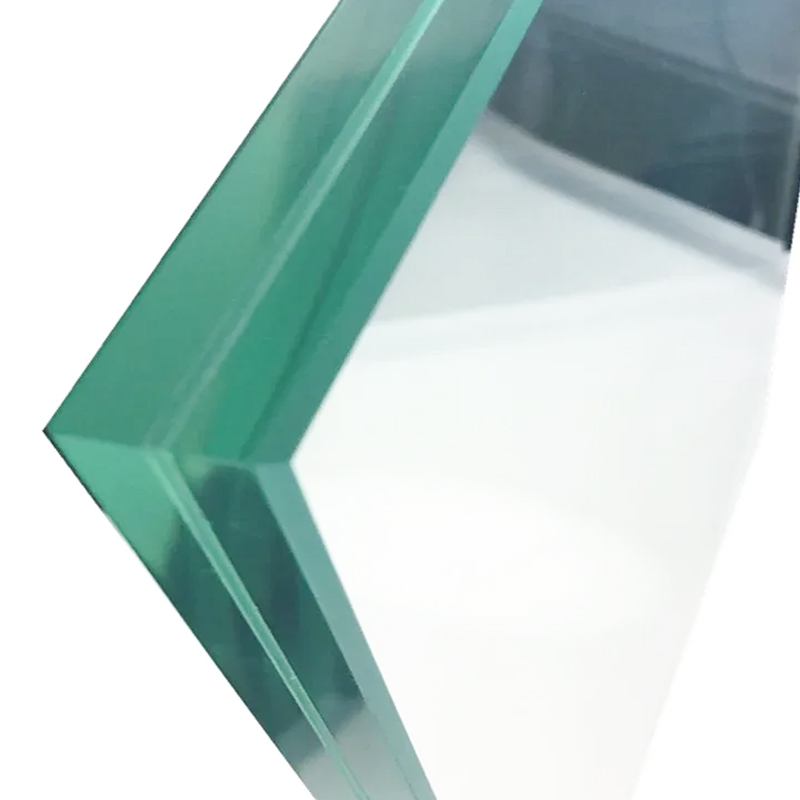 PVB Sound Insulation Interlayer Film HT-S SeriesCo-extruded acoustic PVB interlayer for laminated automotive and architectural glass, helping improve sound insulation by about 5 dB in the 1,000–4,000 Hz range.View Product →
How much quieter it really is, in numbers
A production acoustic windshield typically cuts interior wind-rush noise by 2 to 4 dB(A) at highway speed, with 4 to 6 dB of transmission-loss gain concentrated around the coincidence dip at 2 to 3 kHz.
0.76 mm typical tri-layer film
3-6 dB gain across 1-5 kHz
0-1 dB change below 200 Hz
Typical transmission-loss gain by frequency band, 0.76 mm acoustic film against 0.38 mm standard PVB
125 Hz +1 dB
500 Hz +2 dB
2 kHz +6 dB
4 kHz +5 dB
A 6 dB gain inside a narrow 2-3 kHz band often shows up as only 1-2 dB(A) on a whole-vehicle measurement. Buyers who judge the part purely on that overall figure will underrate it; drivers who complain about hiss notice it on the first motorway run.
For scale, doubling glass from 2.1 mm to 4 mm buys roughly 5 dB across the whole spectrum but adds around 5 kg per square metre on a windshield-sized part. The damped film is the lighter route to a much narrower problem.
Why the interlayer is a tri-layer sandwich, not a soft sheet
A single soft layer would be too weak, too tacky and too permeable to process, so acoustic films are co-extruded as stiff skin, soft core, stiff skin.
The skins bond to the glass and carry mechanical load; the core does the damping. That division is why an acoustic film still runs through a standard lamination cycle and still passes the same adhesion and boil tests as a conventional PVB.
| Interlayer type | Total thickness | Damping behaviour | Where it fits |
| Standard PVB | 0.38 mm | Baseline, low damping | Cost-driven replacement, general glazing |
| Acoustic tri-layer PVB | 0.76 mm | Plus 3 to 6 dB near coincidence | Wind rush on premium and electric vehicles |
| Thick acoustic PVB | 0.81 to 0.86 mm | Slightly broader low-mid control | Extra-quiet cabins, heavy glass builds |
| Ionoplast (SGP) | 1.52 mm | High stiffness, limited damping | Security and structural laminates |
Coincidence dip: at a frequency set by glass thickness and stiffness, the bending wave in the panel matches the airborne sound wave and transmission loss collapses. For 4-5 mm automotive glass this lands between roughly 2 kHz and 3 kHz, which is exactly where wind noise and tyre hiss sit. The soft core damps that dip.
One build constraint is worth flagging early. Head-up display windshields use a wedge-shaped interlayer to cancel double images, and combining a wedge profile with an acoustic core is feasible but narrows the supplier list considerably. Confirm both features in writing before any tooling commitment.
Specifying replacement glass without losing the acoustic layer
The only reliable way to keep the acoustic core is to match the original part number and verify the marking on the glass; dimensions, brand and fit alone will not tell you.
Acoustic OEM glass
- Part number carries the acoustic suffix or an acoustic symbol near the DOT mark
- Film measures about 0.76 mm at the exposed edge
- Roughly 20 to 40 percent above generic laminated glass
- Restores the vehicle to its homologated noise level
Generic laminated glass
- Meets the same safety regulations
- Single 0.38 mm PVB layer, no damped core
- Cheaper and often available the same day
- Measurably louder at 100 to 110 km/h
Workshop check: with the old glass out of the frame, look at the exposed edge under a torch. A tri-layer acoustic film shows a visible sandwich line and measures about 0.76 mm; standard PVB measures 0.38 mm and looks uniform through the section. A caliper settles the question in under a minute.
If the vehicle also carries a forward camera, recalibration is required whichever interlayer is fitted, and the same applies to rain sensors and antennas bonded into the glass. Our acoustic PVB glass buying guide sets out the markings and test data worth requesting from a supplier before the order is placed.
Where laminators lose the damping they paid for
The soft core absorbs moisture faster and flows more easily than standard PVB, so storage conditions, de-airing pressure and autoclave ramp decide whether the rated damping survives production.
- Condition the film before use. Bring rolls into a 20 to 23 C laminating room and let them stabilise; cold film wrinkles at the nip and traps air that no autoclave cycle will remove.
- Protect the core from moisture. The soft layer takes up water faster than the skins do, and absorbed moisture appears later as haze, edge bubbles and weak adhesion.
- Soften the de-airing step. Slightly lower nip pressure plus a clean, square edge trim stops the core from being squeezed outward at the perimeter.
- Verify after the autoclave. Peel adhesion, haze and a boil test on a coupon per shift catch most bonding and moisture problems before the part is packed.
Practical rule: if haze rises after lamination, check film moisture before touching the autoclave curve. A roll that has taken up water cannot be dried back into specification, so prevention is the only control that works.
Most of these controls are routine in any automotive glazing programme, but the moisture window is noticeably tighter with a damped core than with a mono-layer film.
 Automotive PVB Interlayer Film for Laminated Safety GlassAutomotive-grade PVB interlayer for laminated windshields and safety glass, available in clear, green, blue, and gray, with optional sound-insulation film types.View Product →
FAQ: acoustic interlayers in practice
Does an acoustic windshield really reduce noise?
Yes, but inside a defined band. Expect a clear drop in wind rush and tyre hiss above roughly 1 kHz and very little change in low-frequency boom. On a whole-vehicle measurement the gain usually reads as 1 to 3 dB(A), which drivers experience as a calmer, less tiring cabin on long runs.
Can I fit a standard windshield to a car that came with acoustic glass?
Physically yes, and it will meet safety requirements. Acoustically it is a downgrade of several decibels in the band the original part was tuned for, which is why fleets and insurers should compare part numbers rather than headline prices.
Is acoustic laminated glass the same as double glazing?
No. Double glazing uses two panes separated by a gas gap, while an acoustic windshield is a single laminate with a damped interlayer. Side windows described as acoustic are often simply thicker laminated glass, so read the specification sheet rather than the marketing name.
Does the acoustic layer affect cameras, head-up displays or antennas?
Not optically. Camera-based driver assistance still needs recalibration after any windshield replacement, head-up display versions need the correct wedge interlayer, and heated or antenna-equipped glass must match the original connector layout.
Summary: specify by part number, confirm the 0.76 mm tri-layer at the edge, and treat moisture control in the lamination room as part of the acoustic specification rather than an afterthought.