language
 English
 русский
 Español
 عربى
 中文简体
Content
Two 3 mm glass plies bonded by a 0.38 mm interlayer read as a single 6.38 mm sheet right up until the cutting wheel reaches the plastic. That is where most first attempts go wrong: the top score opens, the bottom score misses the plane, and the break walks away from the line. Cutting laminated glass is a two-material job, and the polymer is the part that decides whether the edge comes out clean.
Definition. Laminated glass is two or more glass plies permanently bonded by a thermoplastic interlayer, most often PVB, EVA or ionoplast (SGP). The glass is brittle and follows a score; the interlayer is elastic and does not, so the pane has to be cut in two stages: fracture the glass, then sever the polymer.
Why a Laminated Pane Ignores a Single Score
A single score cannot separate laminated glass, because the interlayer keeps both plies attached long after the glass itself has cracked. In monolithic glass the score defines a fracture plane through the full thickness. In a laminate the crack stops dead at the plastic, and the second ply is still intact underneath.
The practical consequence is alignment. Both faces must be scored on the same plane, and a hand cut tolerates roughly 1 mm of offset before the break steps sideways and the edge needs reworking. Thickness combinations matter too: 3 plus 3 mm with 0.38 mm PVB behaves very differently from 6 plus 6 mm with 1.52 mm PVB, where the interlayer is thick enough to resist a razor blade and needs a hooked foil knife instead.
2 score lines required, one per glass face
0.38 mm standard PVB interlayer per ply pair
1 mm usable score offset on a hand cut
The Tools That Decide Cut Quality
A carbide wheel, a running tool, cutting oil and a sharp interlayer blade cover almost every flat laminated cut. Everything beyond that list changes comfort, not outcome.
| Tool | Job in the cut | Detail that matters |
| Cutting wheel | Scribes the glass surface | Carbide wheel matched to thickness; a dull wheel skips instead of scribing |
| Cutting oil | Keeps the score flooded and clean | Low-viscosity oil or kerosene; dry scoring chips the edge on the run |
| Running pliers or roller | Propagates the score through one ply | Pressure goes under the score line, not on top of it |
| Interlayer blade | Severs the plastic after the glass opens | Single-edge razor or hooked foil knife, kept wet with oil through the stroke |
| Straight edge | Keeps both scores coplanar | Clamp it; a slipped square is the most common cause of stepped breaks |
A wheel that has already scored a few hundred metres of glass will skip on laminated work, and extra pressure never recovers a skipped score.
Hand-Cutting a Flat Pane, Step by Step
Cut laminated glass by scoring both faces on the same line, running each score, then flexing the pane open far enough to slice the interlayer with a lubricated blade.
Clean and mark both faces
Wipe the glass with alcohol so the wheel is not riding over dust. Mark the cut line on both faces from the same datum edge, ideally with a fine marker straight onto the glass.
Score the first face
One firm, even pass from edge to edge with an oiled wheel. Two light passes are safer than one heavy one that shells the edge.
Score the reverse face directly opposite
Flip the pane, align to the same datum and score again. Hold the sheet up to a light source and check that both lines sit on top of each other before you run either one.
Run both scores
Squeeze the running pliers at the edge of the first score and let the crack travel. If it stalls, re-score rather than adding force through the pliers.
Open the pane and cut the interlayer
Lay the glass over a dowel or the edge of a bench, flex until a gap appears along the line, then work a blade lubricated with kerosene or alcohol through the plastic in long, shallow strokes.
Dress the finished edge
Keep the blade shallow at the last few centimetres so the corner does not tear, then run a fine diamond pad along the edge to remove the sharp arris.
A heat gun helps on thick PVB, but warm the interlayer gently and keep the nozzle moving. Overheating softens the film into a smear and can trap bubbles that only show up after lamination.
Interlayer Grade Changes How the Cut Feels
Interlayer chemistry sets how much the bond resists separation: standard PVB slices cleanly, EVA stretches and tears, and ionoplast SGP is stiff enough to demand a fresh blade and repeated shallow passes.
Standard PVB, 0.38 to 0.76 mm
Softens slightly under blade pressure and separates in a clean slice with little tearing. A single-edge razor kept wet with oil is usually enough.
Covers most architectural and automotive laminates, including decorative and acoustic grades.
Ionoplast SGP, 0.76 to 1.52 mm
Stiff and tough, resists blade entry and tends to pull the film rather than cut it. Use a new blade, a shallow angle and short repeat passes.
Common in security, structural and high-wind glazing where post-break retention matters.
EVA sits between the two. It is more elastic than PVB, so a dull blade drags and stretches the film instead of severing it, and the damage shows up later as a white haze along the edge of the laminate. Where a shop handles several interlayer types on the same bench, the blade and scoring pressure should change with the film, not just with the glass thickness. The main grades reaching a cutting bench are PVB interlayer film for general architectural and automotive work, plus the stiffer and softer alternatives below.
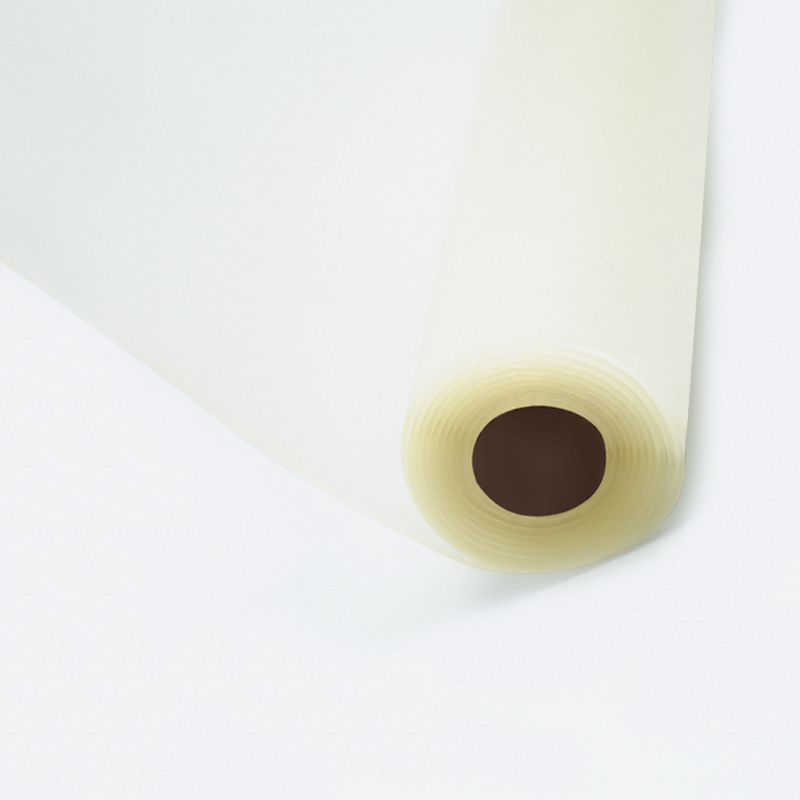 Architectural PVB Interlayer Film for Laminated Safety GlassFor shops comparing interlayers, this clear PVB grade suits architectural and automotive laminated safety glass and comes in several thicknesses.View Product →
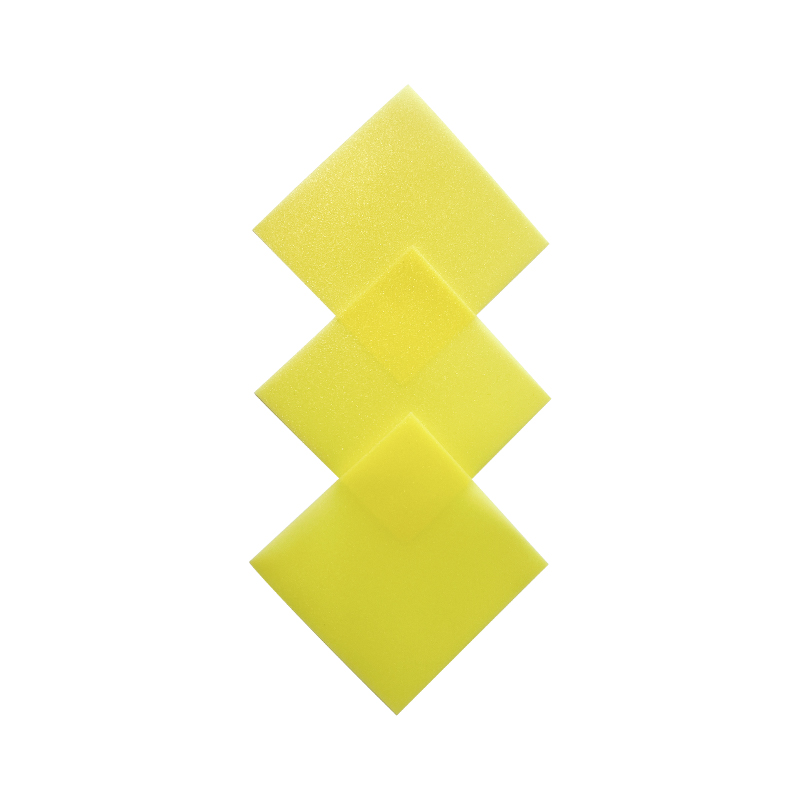 SGP Film for Ultra-Safe Laminated GlassAn ionic interlayer with high shear modulus and strength, intended for demanding transparent structures and explosion-proof glazing applications.View Product →
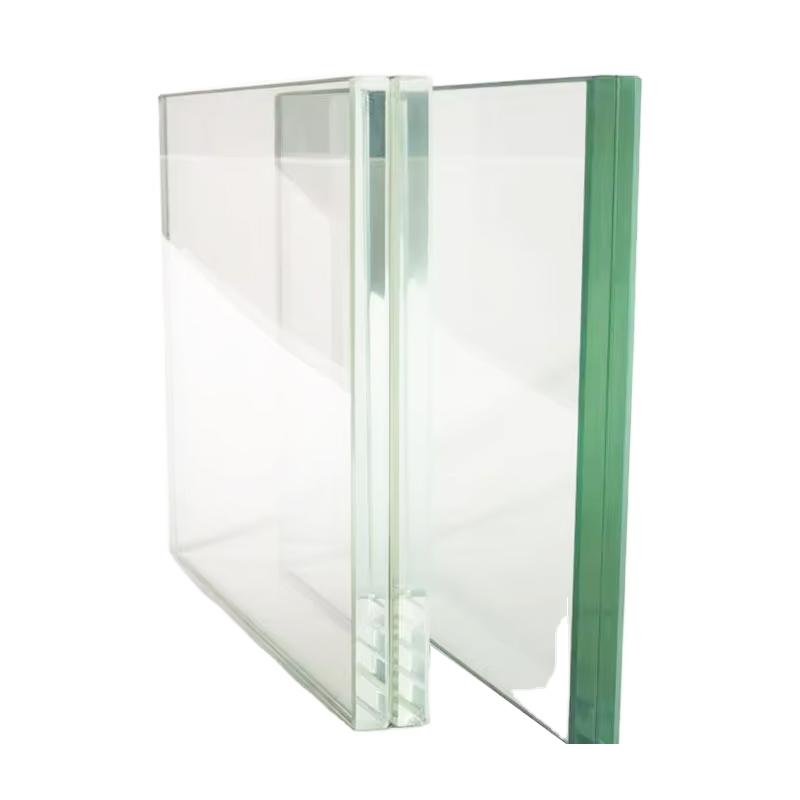 EVA Highly Transparent Film for Specialty Laminated GlassA highly transparent EVA interlayer for colorful, gradient, and architectural laminated glass, available in several thicknesses and wide rolls.View Product →
Failure Modes and What They Signal
Chipped edges, stepped breaks and torn interlayers each point to one specific cause, and none of them are solved by pressing harder.
- Break stepping sideways: the two scores were not coplanar. Re-measure both faces from a single datum and allow about 1 mm.
- Shelling or chipping along the edge: dry wheel or too much pressure. Flood the score with oil and use one steady pass.
- Interlayer torn rather than cut: dull blade or a dragging angle. Change the blade, keep it wet, stay shallow.
- Crack running off the line: a score was run before the second face was scored. Make both scores first, then run them.
Delamination is not a cutting fault. A milky edge that appears weeks later comes from moisture ingress, weak nip-roll pressure or an interlayer used outside its storage window, so chasing it with a sharper blade will not help. The causes and prevention of laminated glass delamination sit upstream of the cutting bench.
Volume changes the economics. Once a shop is cutting more than a few dozen laminates per shift, a CNC table with a dedicated foil-cutting station holds tolerance closer to 0.3 mm and removes the alignment risk entirely, which is usually cheaper than the rework it replaces.
Common Questions About Cutting Laminated Glass
Can laminated glass be cut with an ordinary glass cutter?
Yes, for two-ply laminates up to roughly 8 mm total thickness. Score both faces, run the scores, then sever the interlayer with a lubricated blade. Thicker builds and ionoplast laminates are better handled on a cutting table.
Do you really need to score both sides?
Yes. A single score leaves the second ply intact and the interlayer anchored, so the break either stops or runs ragged. Two opposed scores are what put the fracture plane where you want it.
Does heat make the interlayer easier to cut?
A little. Gentle warming with a heat gun on low softens PVB enough to ease the blade through, but overheating smears the film, closes the gap and can trap moisture. Mechanical cutting should do the work.
What tolerance can a hand cut hold?
About 1 to 2 mm on a straight run, assuming both scores come from the same datum. Automated cutting tables typically hold within a few tenths of a millimetre.
Rule of thumb: if the finished laminate is over 10 mm total, or the interlayer is ionoplast, move the pane to a table and keep the hand tools for trimming.