language
 English
 русский
 Español
 عربى
عربى
 中文简体
中文简体

Content
- 1 Why the Interlayer Makes or Breaks Laminated Glass
- 2 What makes EVA different from PVB
- 3 The three EVA types and where each fits
- 4 Thickness selection: a practical guide
- 5 Processing parameters that determine final quality
- 6 Common specification mistakes and how to avoid them
- 7 Summary: what to check before ordering
Why the Interlayer Makes or Breaks Laminated Glass
Two panes of glass are only as strong as what sits between them. The interlayer determines whether a panel holds together after impact, resists UV yellowing over a decade of sun exposure, and bonds cleanly to decorative inserts or irregular substrates. That's why specifiers and glass processors are moving away from a one-size-fits-all approach to interlayer selection — and why understanding EVA film (ethylene vinyl acetate film) in detail matters before you place an order.
What makes EVA different from PVB
PVB has dominated automotive windshields for decades, but EVA has carved out a distinct and growing role in architectural and decorative laminated glass. The key difference lies in processing: PVB requires a temperature-controlled pre-press chamber followed by autoclave bonding at high pressure — equipment that demands significant capital investment. EVA lamination film, by contrast, can be processed in a convection or infrared furnace at a processing temperature of 135°C, making it accessible to small and mid-sized glass fabricators without autoclave infrastructure.
EVA also bonds to a wider range of substrates — polycarbonate sheets, fabric interlayers, metallic mesh, and printed films — without requiring additional primers. For decorative architectural glass, that flexibility is decisive.
The three EVA types and where each fits
Not all EVA film is the same. Product selection depends heavily on the visual outcome and structural demands of the application.
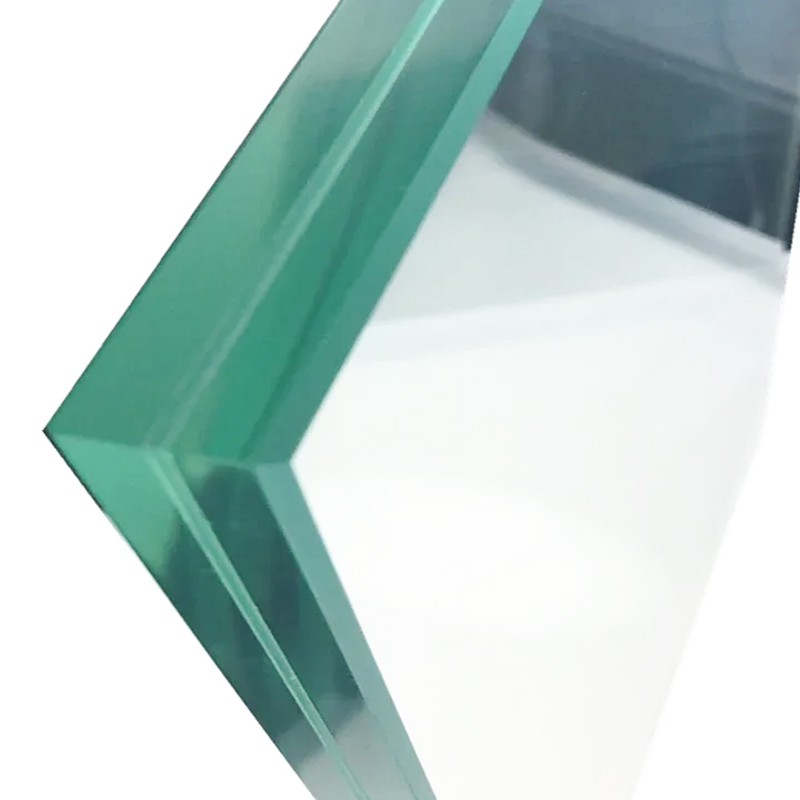
Highly transparent EVA is the workhorse for applications where optical clarity cannot be compromised: hotel lobby glazing, glass railings, curtain walls, and sunrooms. High-transparency EVA lamination film achieves near-perfect light transmission — often exceeding 90% — through controlled vinyl acetate content and UV stabilizer packages that prevent yellowing over time. It is available in thicknesses of 0.38 mm, 0.50 mm, 0.76 mm, and 1.14 mm, with a maximum width of 2,500 mm and roll lengths of 30–100 meters per roll.
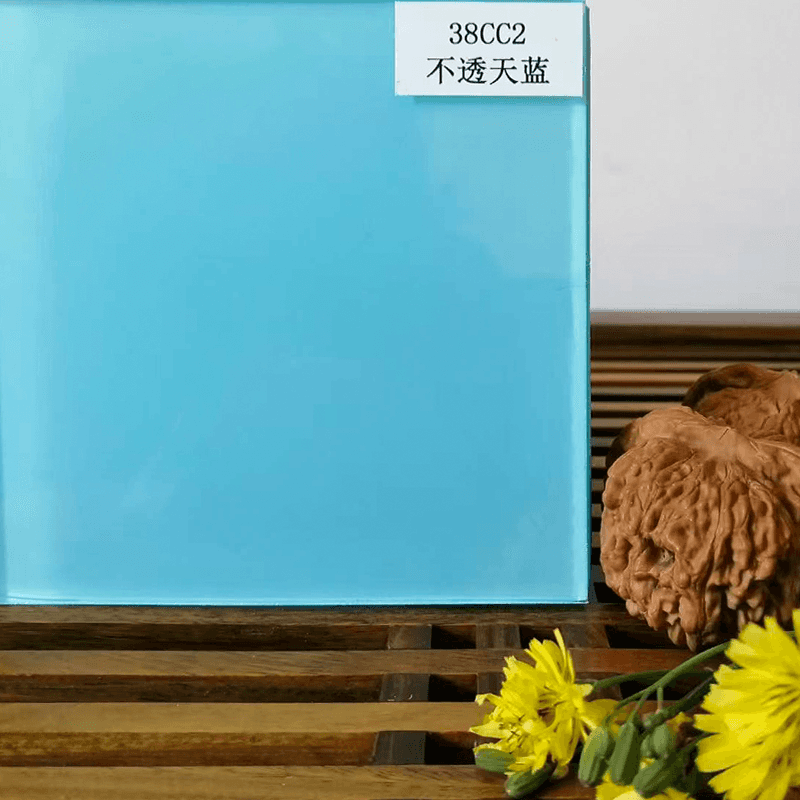
Color EVA film opens up laminated glass to artistic and branding applications. Colored pigments are embedded uniformly through the film matrix, so the color does not fade or peel away from a surface coating. EVA color film for decorative glass is widely used in artistic glass panels, partitions, and feature walls where a consistent chromatic effect is required across large surfaces.
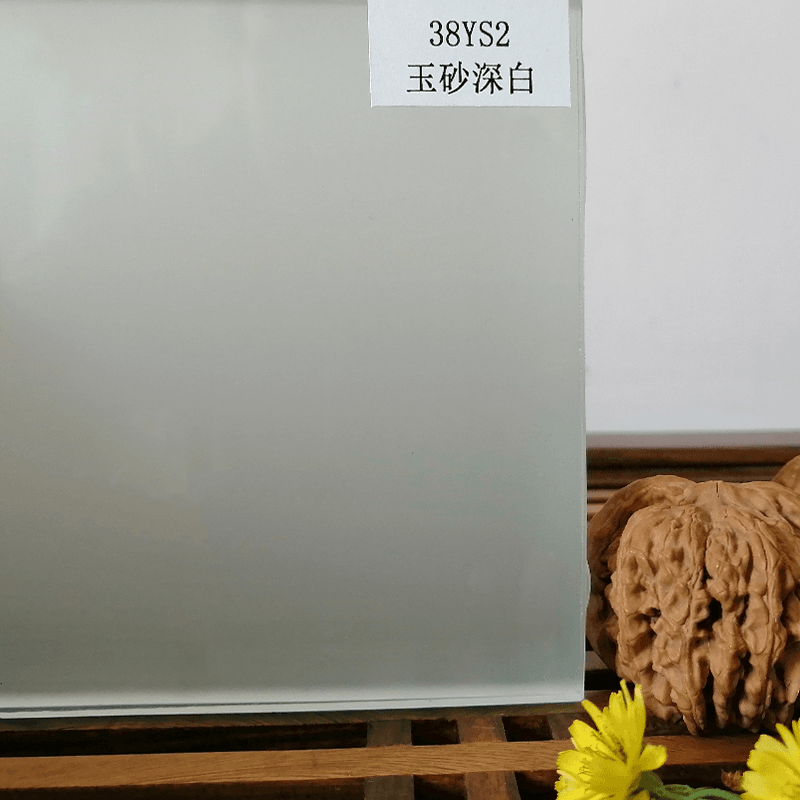
EVA jade sand film produces a matte, translucent finish that diffuses light while maintaining structural integrity. This makes it the right call for privacy glass applications — office partitions, bathroom enclosures, and shower screens — where full transparency is undesirable. EVA jade sand film for privacy glass bonds to glass with the same process parameters as standard EVA, so no production line modifications are needed.
Thickness selection: a practical guide
Thickness is the variable most buyers underspecify. Here is how to think about it:
| Thickness | Typical Application | Key Benefit |
|---|---|---|
| 0.38 mm | Thin decorative panels, low-load interior glass | Maximum optical clarity, minimal haze |
| 0.50 mm | Standard architectural glass, partitions | Balanced clarity and bond strength |
| 0.76 mm | Floors, stairs, overhead glazing | Improved impact energy absorption |
| 1.14 mm | Structural glass elements, high-traffic floors | Maximum fragment retention after breakage |
Thicker films absorb more impact energy and hold shards more effectively after breakage — critical for overhead glazing and floors where fragment containment is a safety requirement. Thinner films preserve optical clarity and are easier to handle in tight bending radii for curved glass applications.
Processing parameters that determine final quality
Even the best-specified film will underperform if processing parameters are off. For EVA film for glass lamination, the standard processing temperature is 135°C, and the insulation time for single-layer glass should be no less than 60 minutes. Cutting that time short risks incomplete cross-linking, which shows up as edge delamination under thermal cycling or humidity exposure.
Glass surfaces must be spotless before layering — any fingerprint oil, water mark, or dust particle trapped at the interface will create a visible inclusion that cannot be corrected after lamination. Cleaning with deionized water or industrial alcohol followed by thorough drying is non-negotiable. During vacuum bagging, maintain a 3–5 cm gap between panels to ensure even vacuum distribution across all pieces simultaneously.
Common specification mistakes and how to avoid them
The most frequent mistake is specifying ethylene vinyl acetate film by price alone. A cheaper film without adequate UV stabilizers will yellow within two to three years in sun-exposed applications — the film itself may be fine on day one, but the long-term optical performance degrades. Ask for UV aging test data, not just a datasheet.
The second mistake is over-specifying thickness for interior, low-load panels. A 1.14 mm film on a decorative interior partition adds cost and slightly reduces clarity with no structural benefit. Match the thickness to the actual load and safety classification of the application.
Finally, width matters for large-format projects. A film with a maximum width of 2,500 mm eliminates the seam lines that appear when narrower rolls are butt-joined — seams that are invisible at installation but often become faintly visible as the glass ages.
Summary: what to check before ordering
- Film type: transparent, color, or matte (jade sand) — matched to the visual requirement
- Thickness: 0.38–1.14 mm — matched to structural load and safety classification
- Width: up to 2,500 mm for seamless large-format panels
- UV stabilizer package: confirmed with aging test data for exterior applications
- Processing temperature: 135°C with minimum 60-minute insulation time for single-layer glass
Getting these five parameters right before production starts is far cheaper than diagnosing delamination or optical defects after the glass is installed. For projects requiring custom dimensions or specialist formulations, working directly with the film manufacturer to align on specifications before cutting test samples is the most reliable path to a consistent result at scale.