language
 English
 русский
 Español
 عربى
 中文简体

Content
A barrier along a six-lane arterial road is usually asked for 25 to 32 dB of insertion loss at the nearest houses, plus a clear view for drivers and enough daylight that residents do not feel walled in. Those demands pull against each other, and the detail that most often decides whether the finished screen meets its acoustic target is not the glass thickness on the drawing. It is the interlayer bonded between the panes, and the way the frame and joints are sealed around it. Get that right and a 35 dB screen behaves like a 35 dB screen. Get it wrong and a 41 dB laboratory rating turns into something closer to 30 on site.
What a glass noise barrier actually is
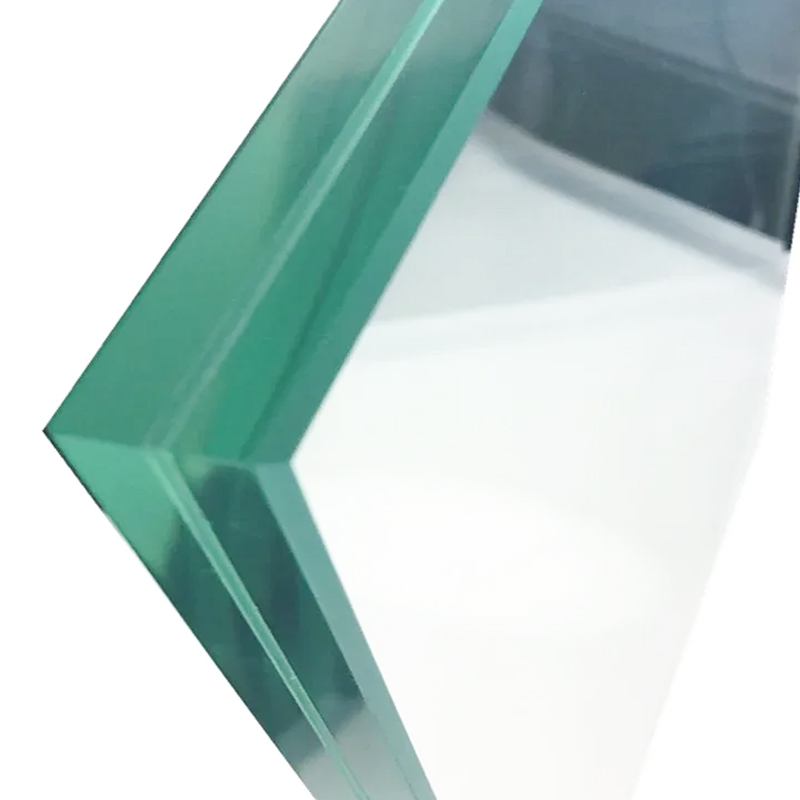
A glass noise barrier is a transparent screen or glazed window assembly built from laminated glass that reduces sound transmission by combining glass mass, interlayer damping and airtight perimeter sealing.
It appears in two main forms. Free-standing barriers sit on steel posts at 2 to 4 m centres beside roads, rail lines and industrial sites, with panels 1.5 to 4 m wide. Window and facade barriers use the same laminated glass inside a sealed frame, often as part of an insulating glass unit. Both rely on laminated rather than monolithic glass, because a single pane is stiff, rings at its coincidence frequency and passes more noise than its weight suggests.
Definition: a glass noise barrier is a laminated glass element, two or more panes bonded with a PVB, EVA or ionomer interlayer, installed as a screen, panel or window to reduce noise while keeping light and visibility.
Rw 30-42Typical rated range for barrier and facade glass
0.38-2.28 mmInterlayer thickness across PVB, EVA and SGP options
+3 to +8 dBGain from acoustic PVB in the 1-3 kHz band
2.5 kgAdded mass per sq m for every 1 mm of glass
- The required Rw rating plus the Ctr traffic spectrum correction
- Glass make-up, pane asymmetry and interlayer type with thickness
- Frame, gasket and edge seal detail, including drainage paths
- Post spacing, wind load and deflection limits for free-standing panels
- Cleaning access and a replacement plan for damaged modules
How laminated glass reduces noise
Laminated glass cuts noise in three places: the panes provide mass that resists airborne sound, the interlayer damps pane vibration before it radiates, and a properly sealed frame removes the leakage paths that quietly undo both.
Mass alone is inefficient. The mass law gives roughly 5 to 6 dB of extra insulation each time surface mass doubles, so moving from 6 mm to 12 mm glass buys about 5 dB while tripling the weight. Real assemblies also suffer a coincidence dip near 2 to 3 kHz, exactly where tyre hiss, engine noise and rail squeal are strongest.
That dip is where the interlayer earns its place. A three-layer acoustic PVB with a soft core raises the damping of the laminate and lifts transmission loss by 3 to 8 dB in the 1 to 3 kHz band without adding a gram of glass.
Rated sound reduction by make-up
6 mm monolithic31 dB
8 mm monolithic33 dB
6 - 0.76 - 6 standard PVB34 dB
6 - 0.76 - 6 acoustic PVB37 dB
8 - 1.52 - 8 acoustic PVB41 dB
Doubling glass mass buys about 5 dB. A well-specified acoustic interlayer buys 3 to 8 dB in the band where traffic and rail noise peak, at a fraction of the added weight.
Choosing the interlayer for the noise spectrum
For most barrier panels and windows, a 0.76 mm or 1.52 mm acoustic-grade PVB delivers the best decibels per unit cost; SGP and ionomer earn their place when strength, edge stability or wind load matter more than the headline rating.
| Interlayer | Typical thickness | Gain in 1-3 kHz | Best fit |
| Standard PVB | 0.38 - 1.14 mm | Reference | Cost-driven facades well away from traffic |
| Acoustic PVB, 3-layer | 0.76 - 1.52 mm | +3 to +8 dB | Roads, rail, plant rooms, hotels, hospitals |
| SGP / ionomer | 1.52 - 2.28 mm | +2 to +5 dB | High wind load, rail, post-breakage retention |
| EVA | 0.50 - 1.00 mm | +1 to +3 dB | Interior partitions and decorative screens |
Standard PVB is still the sensible choice for facades far from the source, where the budget is tight and the noise spectrum is dominated by low frequencies that mass handles well. Acoustic PVB becomes the default anywhere within about 30 m of a carriageway. A separate note on how acoustic PVB behaves in real window assemblies sets out the bands where the gain is largest.
Practical note: acoustic PVB is softer and more moisture-sensitive than standard film. Store it below 25 C, keep the humidity in the lamination room stable, and check the residual moisture of the finished laminate, because a damp edge is where delamination starts.
Where the panel must also resist wind load, impact or a security requirement, the choice shifts toward ionomer interlayers.
 HT-S PVB Sound Insulation Interlayer FilmSound-insulating PVB interlayer with a co-extruded damping core, combining laminated-glass safety with reduced noise, especially in the 1,000–4,000 Hz range.View Product →
Specifying thickness, air gap and rating
Asymmetric make-ups beat symmetric ones: a 6 mm pane paired with a 10 mm pane usually outperforms two 8 mm panes at the same total mass, because the two panes no longer share a coincidence frequency.
| Assembly | Rw (C; Ctr) | Traffic-weighted | Typical use |
| 6 - 0.76 - 6 acoustic PVB | 37 (-1; -4) | 33 dB | Balconies, residential windows |
| 8 - 1.52 - 8 acoustic PVB | 41 (-2; -5) | 36 dB | Roadside barriers, hotels |
| 8 / 16 / 6 + acoustic PVB unit | 43 (-2; -6) | 37 dB | City-centre facades |
| 10 - 1.52 - 10 acoustic PVB | 44 (-2; -5) | 39 dB | Rail corridors, plant enclosures |
Keep the air gap between 12 and 20 mm in an insulating unit; a 6 mm gap couples the panes and gives away several decibels. Panel width matters too, because every vertical joint is a potential leak path. Wide-format film production on a 3.6 m die lets laminators build barrier modules close to 3 m wide without a mid-span joint, so fewer seals have to be got right on site.
The number that matters next to a road is Rw + Ctr, not Rw alone. An assembly rated Rw 41 (-5) gives about 36 dB against a traffic spectrum, a full 5 dB below the headline figure usually quoted in a brochure.
Where a glass noise barrier pays off
Glass barriers earn their cost where a solid wall would cut daylight, block sightlines or add wind load, and three applications cover most of the market.
Highways and roads
Panels 2 to 4 m high on steel posts, set close to the carriageway. Transparency keeps drivers aware of the surroundings, and insertion loss of 10 to 15 dB behind the barrier is realistic.
Rail and metro
Low-frequency content is higher and vibration is constant, so heavier asymmetric make-ups and ionomer interlayers are common, especially where the screen must also contain broken glass.
Buildings and plant
Cooling towers, generators and balconies use window-based screens. Here the barrier doubles as glazing, so the make-up has to satisfy thermal, safety and acoustic targets together.
A barrier that nobody wants to look at gets value-engineered out. Transparent screens survive the planning process because they keep the view.
For rail and exposed coastal sites, the failure mode is rarely pure noise: it is wind pressure plus temperature cycling opening the edge. That is where an ionomer interlayer starts to look cheap.
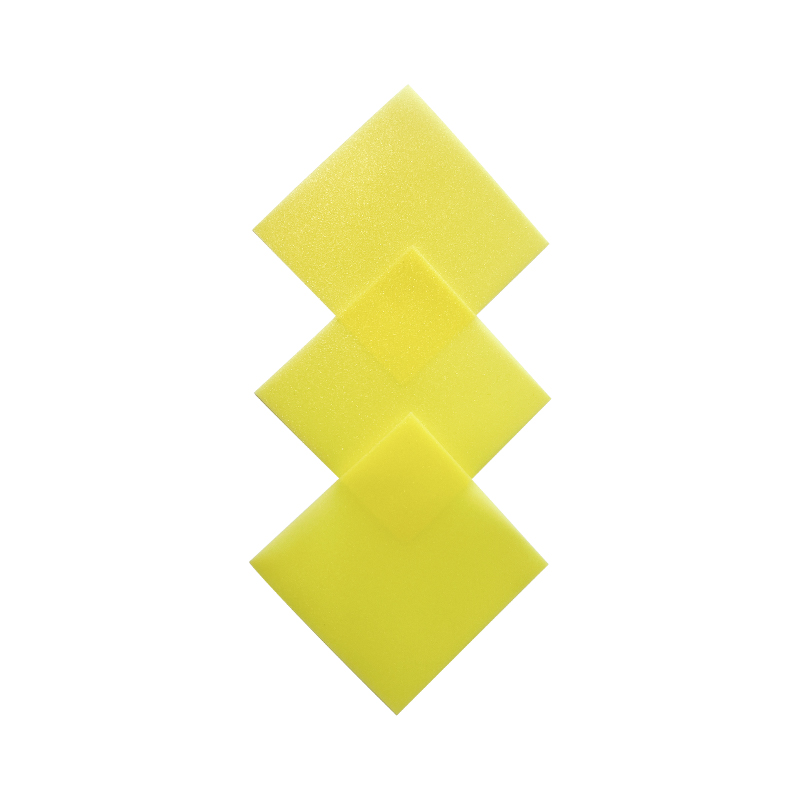 SGP Ionomer Interlayer for Laminated GlassUltra-safe ionomer interlayer with high shear modulus and impact resistance, suited to harsh coastal, rail and security glazing where structural performance matters.View Product →
Installation details that decide the result
Most underperforming barriers are not under-specified glass. They leak: a 1 mm gap along a post, a failed edge seal or a rigid contact point can cost more decibels than the interlayer upgrade ever added.
Check the substrate firstPost centres, base level and deflection limits decide whether the panels sit flat. A twisted panel distorts the gasket and opens the joint below it.
Protect the edge sealCut edges must stay dry through storage and fixing. Moisture uptake at the laminate edge is the leading cause of delamination and of the leak that follows it.
Seal joints and lapsOverlap panels in the direction of prevailing wind and noise, and use compressible gaskets rather than hard point contacts that transmit vibration.
Hunt the flanking pathsSound travels over the top, under the base and through drainage slots. A barrier that stops 500 mm short of the ground behaves like a much shorter barrier.
Field check: walk the barrier with a tone generator, or simply listen at 1 m either side of a joint. A 3 to 4 dB difference between two adjacent panels almost always points to a joint, gasket or seal problem rather than to the glass.
Frequently asked questions
How much noise does a glass noise barrier actually block?
Laboratory ratings for barrier glass usually fall between Rw 30 and 42. On site, expect 10 to 20 dB of insertion loss at nearby receivers, because height, distance, ground cover and sealing all take a share. A well-built Rw 41 assembly beside a road commonly returns 15 to 20 dB at first-floor windows.
Is thicker glass always quieter than a laminated make-up?
No. Doubling the mass of a monolithic pane buys roughly 5 dB, and the coincidence dip near 2 to 3 kHz can cancel much of that gain. A thinner asymmetric laminate with an acoustic interlayer often outperforms a heavier single pane at the same weight.
Can a glass barrier double as a safety screen?
Yes. Laminated glass with an ionomer or thicker PVB interlayer keeps fragments in place after breakage, so the panel that controls noise can also provide containment. Confirm the required resistance class with the structural engineer before the make-up is fixed.
Does a transparent barrier cost more than a concrete one?
Material cost per square metre is higher, but glass panels weigh far less, so posts, foundations and lifting are cheaper, and daylight and sightlines survive. On urban roads, bridges and residential edges, that trade often decides the choice.
The short version: choose the interlayer for the noise spectrum, keep the make-up asymmetric, size the air gap properly, and spend as much attention on joints and edge seals as on the glass itself. Barriers rarely fail on paper. They fail at a 1 mm gap.