language
 English
 русский
 Español
 عربى
 中文简体
Content
- 1 What acoustic laminated front side windows actually are
- 2 Why the front side glass became a second acoustic surface
- 3 Reading a test report without being misled
- 4 What to put on the drawing and in the request for quotation
- 5 Where acoustic performance is lost in lamination
- 6 Adding solar control without losing the damping
- 7 Field complaints worth designing against
- 8 Questions buyers ask before releasing a purchase order
A door-glass drawing for a European C-segment program reads: 2.1 mm clear glass, 0.76 mm acoustic polyvinyl butyral, 2.1 mm green glass, with an interior noise target measured at the driver's outboard ear. A decade ago that stack described a windshield. Today it describes the front side windows, and it is usually the interlayer, not the glass, that decides whether the target is met.
If you are writing that specification, approving a sample, or sourcing the film that goes into it, four decisions dominate the outcome: damping performance by frequency band, the weight the window regulator has to carry, the durability of the laminate edge after years of door slamming, and whether the film supplier can hold the same numbers on the tenth production run that it showed on the first prototype.
What acoustic laminated front side windows actually are
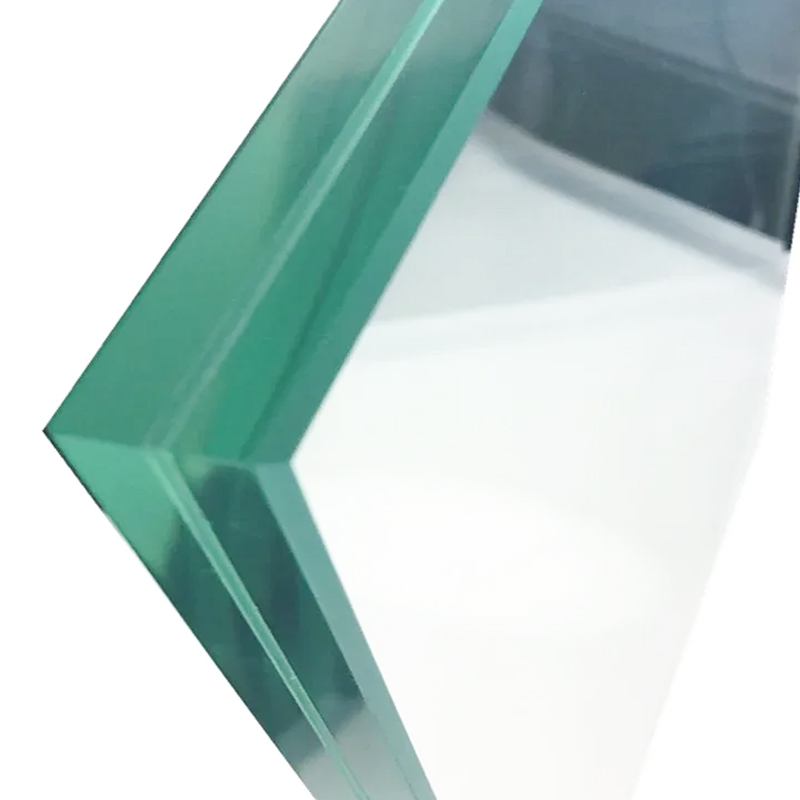
An acoustic laminated front side window is a movable door glass made of two glass plies bonded by a sound-damping polyvinyl butyral interlayer whose soft core converts panel vibration into a small amount of heat instead of radiated noise.
The acoustic function lives entirely in the film. Standard PVB is a relatively stiff, uniform sheet. Acoustic PVB is a tri-layer coextrusion: two thin skin layers that carry adhesion and handling duties, and a softer, more heavily plasticised core that provides the damping. Total interlayer thickness is usually 0.76 mm, with 0.84 mm used on larger or premium glass.
Definition: acoustic PVB is a coextruded interlayer with a low-modulus core. It does not block sound by adding mass. It damps the coincidence resonance of the two glass plies so the panel radiates less noise between roughly 1 kHz and 5 kHz.
A typical build-up comes to about 5 mm finished thickness and 12.4 kg per square metre, against roughly 10 kg for a 4 mm tempered single ply. That 2.4 kg gap is what the regulator, the run channel and the hinge geometry have to absorb, and it is the first number that design teams ask about.
4 mm tempered single ply
- Weight around 10 kg per square metre
- Breaks into small dice on impact
- Sharp transmission loss dip at coincidence
- No film-based UV or intrusion resistance
- Lowest unit cost, simplest processing
2.1 / 0.76 acoustic / 2.1
- Weight around 12.4 kg per square metre
- Fragments stay bonded to the film
- Damped coincidence region, less tonal noise
- PVB blocks most UV below 380 nm
- Higher cost plus tighter process control
Why the front side glass became a second acoustic surface
The front side window is the largest thin glass panel within a metre of the driver's ear, and its coincidence frequency falls close to the band where mirror-wake turbulence is loudest.
Mass law says a doubling of panel mass buys about 6 dB, but doubling glass thickness on a movable window is not practical: the regulator load, the closing effort and the door structure all suffer. Damping works where mass cannot, because the problem at 2 kHz to 4 kHz is resonance, not transmission through a limp partition. A soft core disrupts that resonance directly.
1 kHz to 5 kHz the band where an acoustic core earns its cost
It is worth being blunt about flanking paths. If the weatherstrip does not seal against the glass, or the door module leaks around the speaker aperture, an acoustic laminate will not rescue the cabin. We have seen programs spend on film and then solve the real complaint with a revised belt-line seal.
0.76 mm typical acoustic core
2.4 kg added mass per square metre
2 to 5 dB damping gain, 1 to 4 kHz
Reading a test report without being misled
Ask for third-octave transmission loss data rather than a single weighted rating, because a weighted index averages the whole spectrum and can hide the coincidence dip that the driver actually hears.
Note the shape, not just the peak. A well-matched acoustic build-up lifts the whole coincidence region rather than producing a single narrow notch, and the gain should still be visible at 1 kHz, where wind noise and tyre noise overlap.
Test discipline
Laboratory data to ISO 10140-2 or ASTM E90 describes a 1.2 by 1.5 metre specimen in a pressure-receiving room. Vehicle data from an acoustic wind tunnel at 100 to 140 km/h describes what the customer hears. A serious release requires both, tied to the same build-up and the same edge treatment. Our acoustic auto glass sourcing guide covers the test sequence in more detail.
What to put on the drawing and in the request for quotation
A complete front side window specification names four things explicitly: the interlayer grade and thickness, the glass plies with tint, the acoustic target stated by frequency band, and the durability test regime.
 HT-S Series PVB Sound Insulation Interlayer FilmCo-extruded PVB interlayer with a sound-insulation core for laminated glass, intended to improve acoustic performance in the 1,000–4,000 Hz range while retaining safety.View Product →
| Build-up | Typical Rw | Weight | Where it fits |
| 4 mm tempered monolithic | about 30 dB | 10.0 kg/m2 | Cost-driven baseline, no acoustic claim |
| 2.1 / 0.76 standard PVB / 2.1 | about 33 dB | 12.4 kg/m2 | Security and UV benefit, limited damping |
| 2.1 / 0.76 acoustic PVB / 2.1 | about 36 dB | 12.4 kg/m2 | Mainstream acoustic front door glass |
| 2.1 / 0.84 acoustic PVB / 2.1 | about 37 dB | 12.5 kg/m2 | Large glass, premium segment, higher speed targets |
Beyond the table, the drawing should carry the details that decide whether the part can be built at rate.
- Interlayer grade and nominal thickness, plus the supplier material designation so substitutions are controlled
- Glass thickness, tint and whether an infrared-absorbing composition is required
- Acoustic target expressed as third-octave insertion loss against a defined tempered baseline
- Edge treatment, encapsulation, print band and bracket or slider layout
- Durability regime: heat soak, boil test, and the acceptance limit for edge delamination
- Handling rules for the film between delivery and layup, including moisture limits
Where acoustic performance is lost in lamination
Most acoustic failures are process failures, not material failures: moisture pickup in the film, incomplete de-airing, or an autoclave cycle that leaves haze and micro-bubbles at the edge.
- Condition the film. Store between 15 and 25 degrees Celsius below 40 percent relative humidity, and confirm moisture content before layup, typically 0.3 to 0.6 percent for automotive work.
- Build the layup on a clean, flat table. Handle the sheet with lint-free gloves, trim within the agreed margin, and control wrinkles at the curvature rather than stretching them flat.
- De-air properly. Nip rollers or a vacuum ring must evacuate the edge before the assembly reaches the autoclave, because trapped air becomes permanent haze.
- Run a qualified autoclave cycle. For most automotive stacks this means 12 to 14 bar, 135 to 140 degrees Celsius, and a hold time of 60 to 90 minutes depending on glass thickness and curvature.
- Inspect and record. Check haze, edge clarity, thickness at the corners and delamination after heat soak, then keep those records linked to the film lot.
 Automotive PVB Interlayer Film for Laminated Safety GlassAutomotive-grade PVB film offered in clear, green, blue, and gray, with 0.76 mm shade options and listed optical, moisture, and mechanical specifications for laminated safety glass.View Product →
Film consistency matters as much as the recipe. A sheet produced on a wide automated die line holds thickness tolerance across the full web, which is what keeps the damping behaviour uniform from the centre of the door glass to the edge. Details of the line and the inspection equipment are on our factory page.
Adding solar control without losing the damping
Acoustic damping and infrared control can be combined in a single interlayer, but every added function narrows the process window and should be tested on the same sample rather than assumed.
Front side glass carries a large share of the solar load onto the driver's arm and shoulder, so programs increasingly ask for one film that damps noise and rejects near-infrared energy. The practical risk is optical: multilayer infrared-reflective constructions are sensitive to haze and colour shift when the autoclave profile drifts, and a tinted acoustic build-up changes the apparent colour of the interior trim.
Write each function as a separate line item with its own acceptance limit. An acoustic target of 2 to 5 dB in the coincidence band and an infrared rejection figure are two different tests, and a single combined pass or fail statement hides which one the sample actually met.
 PVB Heat Insulation Film with Infrared BlockingPVB film with a nano heat-insulating medium for laminated architectural and automotive glass, offered in multiple thicknesses with infrared blocking and visible-light transmission.View Product →
Where the acoustic requirement is modest, a heat-insulating film with a standard core is usually enough. Where the target is aggressive, specify the acoustic core first and add the infrared function second, then re-run the third-octave test, because the two functions interact inside the same laminate.
Field complaints worth designing against
The complaints that reach warranty are rarely about decibel figures. They are about edge whitening, haze after a hot summer, and wind noise that turns out to be a seal problem rather than a glass problem.
- Edge delamination traced to insufficient edge seal or moisture pickup before lamination
- Optical distortion at the curvature from uneven pressure distribution in the autoclave
- Whistling or booming caused by weatherstrip contact and door module leaks, not by the laminate
- Regulator and run-channel wear from the extra 2.4 kg per square metre
- Production drift between the prototype sample and serial parts, usually unrecorded film lot changes
Each of these is preventable at the specification stage. Name the test, name the acceptance limit, and name who signs off when a film lot changes.
Questions buyers ask before releasing a purchase order
Acoustic laminated side glass is a system decision: film, glass, seal and process have to be qualified together.
Are acoustic laminated front side windows worth the extra weight?
For most mid and premium programs, yes. The penalty is roughly 2.4 kg per square metre against 4 mm tempered glass, and the return is a measurable reduction in the 1 to 4 kHz band where wind noise and road noise overlap. Judge it as cost per decibel in that band rather than as cost per square metre of glass.
Can a driver tell whether a car has them?
Usually, at highway speed with the audio system off. The laminate also shows a visible film line at the exposed edge where the two plies meet, which is the quickest physical check on a production vehicle.
Do they improve security and UV protection as well?
Yes. The interlayer holds glass fragments after breakage, which slows intrusion through a side window considerably, and standard PVB blocks most ultraviolet radiation below about 380 nm, protecting trim and skin.
Is acoustic PVB processed differently from standard PVB?
The lamination window is broadly similar, but the softer core is more sensitive to moisture and to incomplete de-airing. Keep the qualified autoclave recipe and add an edge-bond check to the first-off inspection whenever the film lot or the glass supplier changes.