language
 English
 русский
 Español
 عربى
 中文简体
Content
Two windshields can both read 70 percent visible light transmission on the label and still sit eight degrees apart inside the cabin after two hours in the sun. The difference is usually not the glass. It is the thin plastic film laminated between the two glass plies, and the additives carried inside it. For anyone who laminates, buys, or specifies automotive glazing, that film is where the solar glass conversation actually happens.
99% UV blocked below 380 nm in a standard automotive build
0.76 mm Common PVB interlayer thickness in a windshield
30-60% Near-infrared rejection with a heat-insulation grade
This guide covers how a solar glass windshield is built, what the interlayer contributes to UV and heat control, and the specification and handling numbers that decide whether a laminated batch ships or comes back.
What a Solar Glass Windshield Actually Is
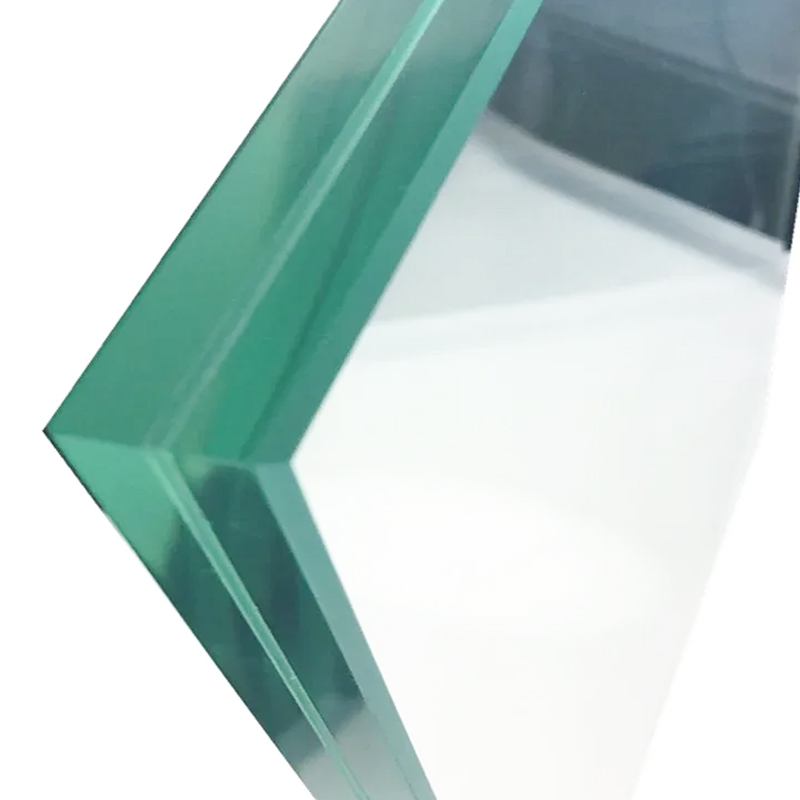
A solar glass windshield is a laminated windshield engineered to reject ultraviolet and near-infrared energy while keeping visible light transmission high enough for safe driving.
Solar glass: a glazing build in which the glass composition, an optional solar-control coating, or the interlayer film reduces solar heat gain and UV transmission without pushing visible light transmission below the legal floor for the driver's primary vision area.
The label on the glass is only a summary. Three separate components can each carry part of the load, and most production windshields combine at least two of them.
Where the solar control physically sits
- Body glass chemistry. Iron-doped and other infrared-absorbing glass compositions cut heat at the source, but they also push the glass toward a green tint that has to be accepted at the design stage.
- The interlayer film. A 0.76 mm polyvinyl butyral film blocks UV as a chemistry function and can be loaded with infrared-absorbing particles for heat control, with no change to the outer glass surface.
- A reflective coating. Solar-control coatings work well on panoramic roofs and rear glazing, but they complicate wiper zones, camera windows, and printed antennas, so they stay rare on the main windshield.
In practice, the windshield does the UV work through the interlayer and most of the heat work through a combination of glass chemistry and film additives.
Where the Interlayer Does the Real Work
The interlayer handles nearly all UV protection in a standard windshield and most of the infrared control in a heat-insulation build.
A conventional automotive PVB film already absorbs more than 99 percent of radiation below roughly 380 nm. That is an absorber function, not a thickness function. Heat control is different: it depends on whether the film carries infrared-absorbing additives, and on how much of the near-infrared band between 780 nm and 1400 nm those additives can capture. Roll width matters too, because panoramic roofs and one-piece windshields need a continuous sheet. Wide casting lines determine whether a 2.2 m opening can be cut from a single roll, which is worth checking in the film production facility before a roof program is quoted.
| Interlayer type | Typical build | UV cutoff | Heat contribution | Where it fits |
| Standard clear automotive PVB | 0.38 or 0.76 mm | Over 99% below 380 nm | Baseline | Volume windshields |
| UV-cut automotive PVB | 0.76 mm | Over 99% below 380 nm | Baseline | General solar glass |
| Heat-insulation PVB | 0.76 mm | Over 99% below 380 nm | Noticeable NIR reduction | Hot-climate windshields |
| Acoustic PVB | 0.76 to 0.84 mm | Over 99% below 380 nm | Baseline plus 3 to 6 dB noise damping | Premium and electric cabins |
| Ionoplast (SGP) | 1.52 mm | Over 99% below 380 nm | Low | Security glazing, rarely windshields |
 Automotive PVB Interlayer Film for Laminated Safety GlassAutomotive-grade PVB for laminated safety glass, offered in clear and shade colors with optical and mechanical specs; check UV transmission and wide-roll availability.View Product →
Doubling film thickness does not double UV rejection. Once the absorber package reaches its design cutoff, extra thickness adds mass and cost, not protection. The number worth arguing about is the transmission curve below 380 nm, not the millimeter figure on the purchase order.
Reading the Numbers: UV, IR, and Visible Light
Expect roughly 99 percent UV rejection, 30 to 60 percent near-infrared rejection with an infrared-grade interlayer, and a visible light transmission figure that stays at or above the legal minimum for the driver's primary vision area.
UV below 380 nm99%
Near-infrared, IR-grade film52%
Visible light transmission74%
380 nm
The wavelength where automotive UV absorber packages are tuned to fall below 1 percent transmission. Everything above that line is where heat load and interior fading begin.
 PVB Heat Insulation Film for Laminated GlassNano heat-insulating PVB interlayer for architectural and automotive laminated glass, blocking infrared while maintaining visible light transmittance; relevant where VLT limits tint.View Product →
Visible light transmission is the constraint that limits everything else. Most markets set a floor around 70 percent for the windshield, which leaves very little room to add tint. That is why solar windshields look clear: the heat rejection happens outside the visible band, not through a darker shade.
The same logic explains why an aftermarket tint film is not a substitute. A tint reduces visible light and can push the windshield out of compliance, while an infrared-grade interlayer removes energy from a band the driver never sees.
Specifying an Automotive Interlayer in Four Steps
Fix the optical target first, then the thickness, then the additive package, and only then the handling specification. Reversing that order is how a batch ends up with good UV numbers and a failing haze reading.
- Lock the optical target. Agree visible light transmission, haze below 1 percent, and color neutrality between the glass supplier and the film supplier before sampling. Two datasheets that each look acceptable can still conflict at the laminate level.
- Match thickness to the build. 0.38 mm suits thin laminates, 0.76 mm is the standard windshield figure, and 0.76 to 0.84 mm acoustic builds trade a little weight for cabin noise.
- Choose the additive package. UV only, UV plus infrared, or UV plus infrared plus acoustic damping. Each addition carries a cost, and infrared absorbers introduce a slight color shift that the customer has to accept in writing.
- Pin the handling specification. Moisture content between 0.3 and 0.6 percent, controlled surface roughness, storage between 10 and 25 C, and relative humidity under 40 percent.
 PVB Sound Insulation Interlayer Film HT-S SeriesCo-extruded PVB with a sound-insulation core layer for laminated glass, improving acoustic comfort by about 5 dB in the 1,000–4,000 Hz range.View Product →
The interlayer datasheet is the document that decides your reject rate. Request the UV transmission curve, near-infrared rejection figures across 780 to 1400 nm, moisture content at packing, and adhesion values to both glass surfaces. A glass datasheet alone will not show any of these.
Sourcing Pitfalls That Appear After Lamination
Most field failures in solar windshields trace back to film handling and adhesion, not to additive chemistry.
Spec-compliant handling
- Film stored at 10 to 25 C and under 40 percent relative humidity
- Moisture verified at receiving, not at lamination
- Deairing profile matched to the film's surface roughness
- Edge trim of at least 2 mm left after lamination
Shortcut that fails in the field
- Film racked next to the oven, cycling through the dew point
- Moisture assumed from the packing certificate alone
- Nip pressure copied from a different film grade
- Trim set flush to save material
Delamination and edge haze rarely appear on the day of lamination. They surface after a few hundred thermal cycles, well past the point where the batch can be recovered. When you are shortlisting grades across suppliers, published automotive PVB film types and performance standards are a reasonable starting point before you move to sample laminates.
The failures that reach a warranty claim are about moisture, adhesion, or edge trim. They are almost never about a film that came in one percent short on infrared rejection.
Frequently Asked Questions
A quick rule: if the windshield has to stay clear, put the heat rejection in the interlayer. If the glazing can be tinted, the glass chemistry and coating can carry more of the load.
Does a solar glass windshield block all the heat?
No. It removes most UV and a meaningful share of near-infrared energy, but visible light still carries heat. Cabin temperature also depends on dashboard materials, interior volume, and how long the vehicle sits in direct sun.
What interlayer thickness is standard for a solar windshield?
0.76 mm is the common figure for a standard windshield build, usually made from two 0.38 mm plies. Acoustic grades often run slightly thicker, in the 0.76 to 0.84 mm range, while thin laminates may use 0.38 mm in total.
Can a solar windshield be replaced with ordinary laminated glass?
It can, but the cabin will run hotter and the dashboard and trim will fade faster. If the replacement is not matched to the original interlayer grade, the vehicle loses UV and infrared performance even though the glass fits the opening.
Does the interlayer interfere with cameras or radar behind the windshield?
Not in the visible or radio bands when the film is formulated for automotive use. The real risk sits in the printed frit and camera window area, where thickness and moisture control need tighter tolerances. Confirm the camera bracket zone with the film supplier before release.
A solar glass windshield is a system decision, and the interlayer is the easiest part to specify badly. Get the transmission curve, the moisture window, and the adhesion values in writing, then check them against the glass chemistry you are actually laminating rather than the chemistry in the brochure.
The cheapest place to solve a heat problem is in the film specification, before the first laminate is cured. After that, every fix costs a full batch.