language
 English
 русский
 Español
 عربى
 中文简体
Content
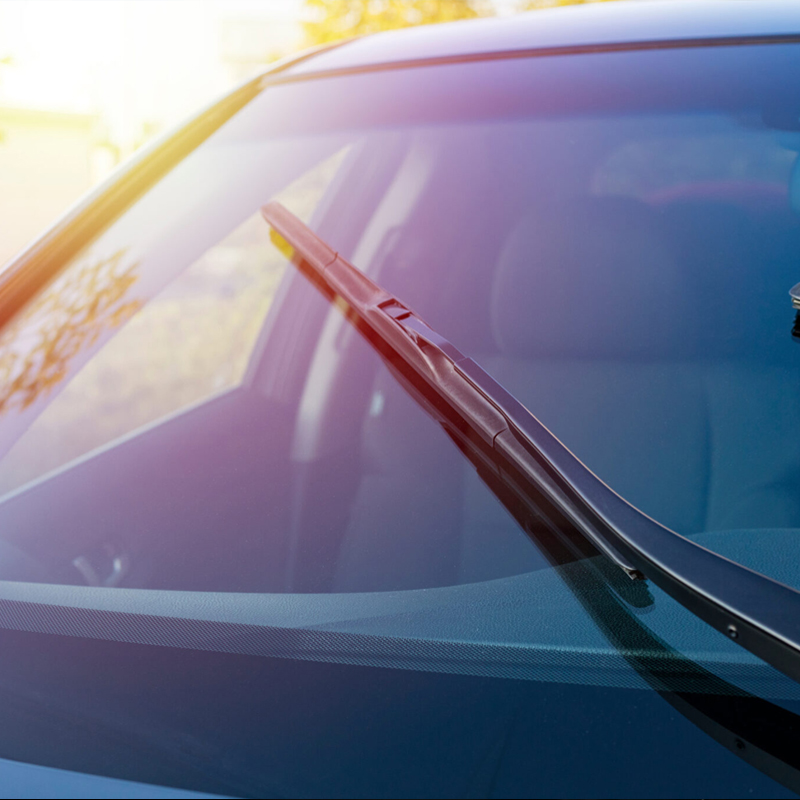
Two people can sit behind the same windshield and see the same head-up display differently: crisp digits in front of the driver, a faint offset double image in the passenger's eyeline. That gap is almost never the projector. Plain automotive glass reflects roughly 8 percent of the projected beam at its inner surface, and a second reflection comes back off the outer surface a few millimetres away. Head-up display HUD reflective film is the layer that manages that pair of reflections, either as a thin optical laminate bonded to an existing windshield or as a wedge-shaped PVB interlayer built into factory HUD glass.
8% First-surface reflectance of uncoated automotive glass
0.3 to 0.7 mrad Typical wedge angle range for HUD windshields
Under 1% Haze level needed for sharp projected digits
Those figures move with geometry, and that is the point. A film that flattens the double image on a sedan with a 60 degree rake may do very little for a van with a taller windshield and a longer projection path. The sections below cover what the film does optically, how the retrofit and factory routes differ, and which numbers belong on a purchase order rather than a brochure.
What a HUD Reflective Film Actually Does
A HUD reflective film is a transparent optical layer applied to or laminated within a windshield that raises inner-surface reflectance in a controlled band, so a projector image lands inside the driver's eyebox without pushing visible light transmission below legal limits.
Three jobs run at once, and they compete with each other:
- Lift reflectance. Standard glass sits near 8 percent. HUD films target a controlled gain, often quoted between 12 and 25 percent, enough for daylight legibility without turning the glass into a mirror.
- Protect visible light transmission. Most markets require around 70 percent VLT for the windshield. A film that adds reflection by eating transmission fails inspection, however good the image looks.
- Hold haze low. Scatter is what turns digits into a glow. Haze comes from coating quality and adhesive thickness, and more often than suppliers admit, from dust trapped during installation.
Factory HUD glass takes the opposite approach. Instead of brightening the inner reflection, a wedge-shaped PVB interlayer of roughly 0.3 to 0.7 milliradians tapers across the laminate so the inner and outer reflections converge at the driver's eye. The driver sees one image because the two reflections stack on top of each other, not because either one is stronger.
Two Routes to a Readable Image: Retrofit Film vs Wedge PVB
The optical goal is identical in both routes, but the physics are not: a retrofit film makes the inner reflection brighter, while a wedge interlayer moves the outer reflection so the driver only perceives one image.
Aftermarket reflective film
- Bonds to the inner surface of an existing windshield, usually as a wet-applied optical PET laminate.
- Raises reflection directly, so it suits a projector aimed at the glass.
- Fits retrofit HUD units, fleets and older vehicles.
- Reduces the outer-surface ghost but rarely removes it completely.
- Service life depends on adhesive quality and edge sealing.
Wedge PVB interlayer
- Built into the laminate at the glass plant, between two glass plies.
- Redirects the outer reflection instead of boosting the inner one.
- Removes the double image by design when the wedge angle matches the rake.
- Requires wedge angle and orientation to be fixed at the design stage.
- Cannot be retrofitted to an existing windshield.
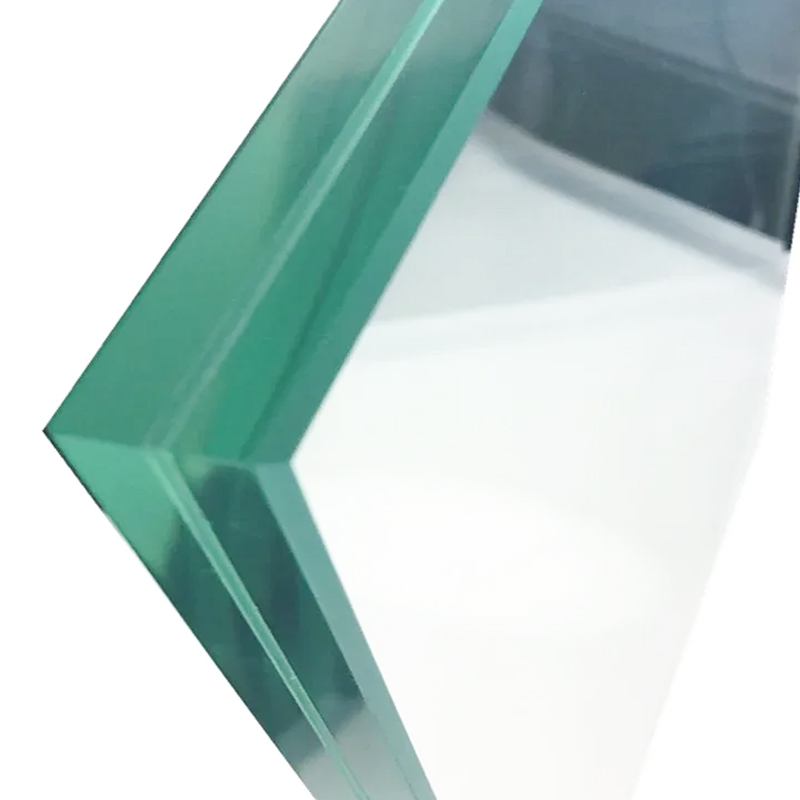
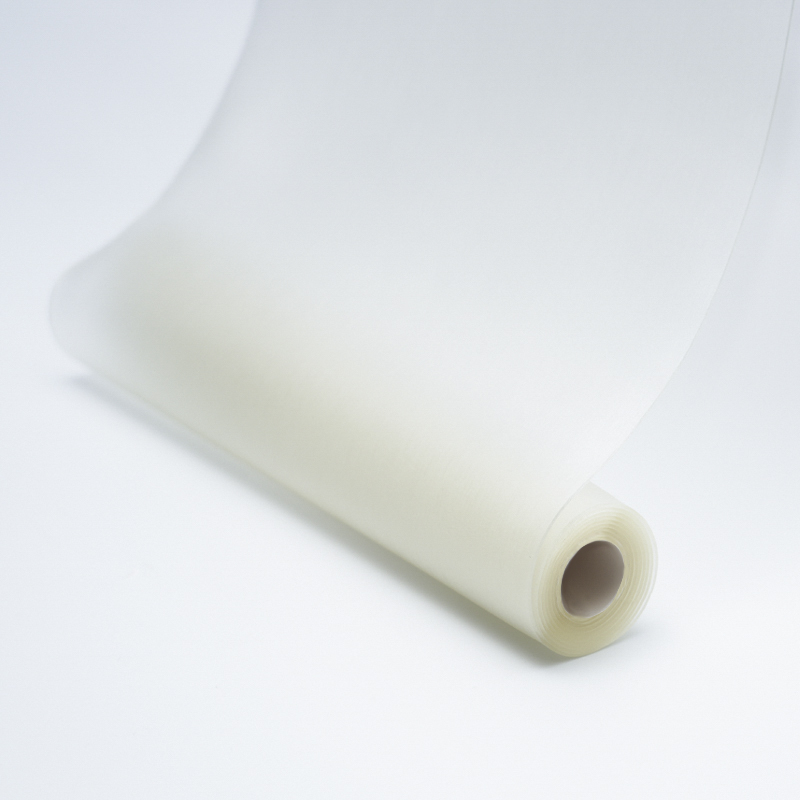 Automotive PVB Interlayer Film for Laminated Safety GlassAutomotive PVB interlayer for laminated safety glass, available in clear, green, blue and gray with sound-insulation options; useful for windshield specification discussions.View Product →
| Factor | Aftermarket reflective film | Wedge PVB interlayer |
| Position in the build | Inner surface, applied after glazing | Inside the laminate, between glass plies |
| Ghost image control | Reduced, strongly geometry dependent | Designed out when the wedge is correct |
| Effect on VLT | Small loss, typically 1 to 3 percent | Neutral, set by glass and PVB grade |
| Retrofit possible | Yes | No |
| Tooling lead time | Days | Weeks, tied to glass design |
| Best fit | Retrofit HUD, fleets, older models | Factory HUD windshields, new platforms |
A retrofit film fixes the brightness of the image. A wedge interlayer fixes the position of the image. Buyers who confuse the two spend money on the wrong half of the problem.
Wedge design also interacts with the rest of the automotive grade. Acoustic cores, IR-cut additives and colour tints all sit in the same optical stack, so a change in one layer usually forces a recheck of the others. Background on grade selection is covered in our review of automotive PVB film types and performance standards.
Wedge Angle, Eyebox and Why Fractions of a Milliradian Matter
Wedge angle is the thickness taper across the interlayer that brings the inner and outer reflections together at the driver's eye, and a deviation of a fraction of a milliradian is enough to bring the double image back at the top of the eyebox.
Ghost separation versus wedge error, illustrative
0.00 mrad 1 mm
0.05 mrad 3 mm
0.10 mrad 6 mm
0.20 mrad 12 mm
The chart is illustrative, not a specification. It shows the direction of the effect on a typical passenger-car windshield with a projection distance around 1.8 m. Real values must be calculated from rake angle, glass thickness, projection distance and eyebox size, which is why two windshields that look identical from outside can need different wedge angles.
Wedge direction matters as much as wedge angle. A correct angle installed the wrong way round doubles the separation instead of cancelling it, so orientation has to be marked on the interlayer and checked at the cutting table, not assumed.
 PVB Heat Insulation Film for Laminated GlassFunctional PVB heat-insulation film for architectural and automotive laminated glass, with infrared blocking and safety glazing properties; relevant when solar-control interlayers are specified.View Product →
HUD windshields sold in hot markets usually pair the wedge with a solar-control grade. A heat insulation PVB keeps cabin load down without disturbing the optical geometry, as long as the additive does not add haze of its own. Eyebox size is the other half of the calculation: a large eyebox tolerates more wedge error than a compact one, and that tolerance should be defined before the glass drawing is released.
Specifications Worth Writing Into a Purchase Order
Six parameters decide whether a HUD film or interlayer will hold up in production, and all six belong on the purchase order rather than in a presentation.
| Parameter | Typical target | Why it matters |
| Visible light transmission | 70 percent or above at the windshield | Legal minimum in most markets, and tint losses stack |
| Haze | Under 1 percent | Scatter softens digits and worsens at night |
| Reflectance gain | Matched to projector output | Too little reads dim, too much reads as a mirror |
| Wedge angle tolerance | Commonly plus or minus 0.02 to 0.03 mrad | Small errors push the ghost into the eyebox |
| Wedge orientation | Marked and consistent per part number | A reversed wedge doubles the double image |
| PVB moisture content | Within supplier window, often 0.35 to 0.55 percent | Out-of-range moisture causes bubbles and delamination |
| Roll or sheet width | Covers the largest windshield blank | Fewer splices, less trim waste |
Ask for the measurement method, not just the number. A wedge angle quoted from a laboratory sample and a wedge angle measured on a production roll are different claims, and only the second one predicts what your autoclave will produce next Tuesday.
Width is the quiet cost driver. A wide line with a stable die reduces the number of joints across a windshield blank, and every joint is a place where the optical stack can drift. The 3.6 m automatic die on our PVB lines was specified for exactly this reason: HUD blanks and large architectural lites can come off a single roll rather than a splice.
Where Installations Fail
Most HUD film complaints trace back to four process issues: trapped moisture, dust under the film, edge lift and uneven squeegee pressure, and none of them are optical faults in origin.
- Clean and control the zone. A dust-free bay with filtered air and a tack cloth pass before application prevents more failures than any coating upgrade.
- Wet-apply and squeegee from the centre outward. Work in overlapping strokes toward the edges so the water and any trapped air leave the film rather than being pushed into a pocket.
- Seal the edges. A thin, continuous edge seal stops premature lift and stops cleaning chemicals from creeping under the laminate.
- Cure before judging. Wait 24 to 48 hours before assessing optical quality; a fresh installation often looks hazier than it will be once the water has fully left the adhesive.
- Verify at night, not at noon. Daylight hides low-level scatter, while a dark road with oncoming headlights exposes it immediately.
For laminated HUD glass the list is shorter and less forgiving: PVB moisture out of range, wedge orientation flipped, and an autoclave cycle that traps air at the thin edge of the wedge. Any of the three produces scrap that only appears after trimming, when the glass is already finished.
The Short Version
Match the tool to the problem. If a vehicle already has a windshield and no HUD, a retrofit reflective film is the practical answer, applied across the projection zone and accepted for what it is: a brightness gain with a partial ghost reduction. If a new windshield is being designed, the wedge belongs in the interlayer specification from the start, with angle, orientation and tolerance agreed with the glass maker and the projector supplier together.
Buyers who treat HUD film as an accessory tend to pay twice. Buyers who treat it as an optical stack specification, with VLT, haze, wedge angle and moisture written into the order, generally solve the double image on the first attempt.
FAQ: HUD Reflective Film
Four questions come up in almost every HUD film enquiry, and the short answers are below.
Can I add a HUD reflective film to a car that never had a HUD?
Yes. A retrofit film or combiner is the usual route for aftermarket head-up units. Position the film across the projector's footprint rather than the whole windshield, keep the edges sealed, and expect the image to be brighter but not perfectly single, because the outer-surface reflection is still there.
Does HUD film affect night driving or driver-assist cameras?
A correctly specified film loses only a few points of visible light transmission and does not touch the camera window, so night driving and driver-assist performance stay within specification. Problems appear when the film overlaps the camera zone or when reflectance is pushed so high that low-sun glare becomes a veil.
Why does my HUD look doubled after a windshield replacement?
The replacement glass probably lacks the correct wedge, or the wedge is oriented the wrong way. A factory HUD windshield carries a specific wedge angle matched to the rake and projection distance. Fitting a standard windshield, even a high-quality one, restores the optics of a plain pane and the ghost image returns.
How should a HUD film be cleaned?
Use a soft microfibre cloth and a pH-neutral cleaner, and wipe in one direction without pressing hard on the edges. Ammonia-based glass cleaners degrade the adhesive over time, and abrasive pads leave micro-scratches that scatter projector light exactly where the driver is looking.