language
 English
 русский
 Español
 عربى
عربى
 中文简体
中文简体

Content
A tenant two floors above a six-lane ring road applies a noise-reducing film to every window in the apartment and still hears the 11 p.m. motorcycles as clearly as before. That outcome is common, and it does not mean the film was defective. A film applied to existing glass changes glass behavior only at the margin, while the energy that actually disturbs sleep, mainly low-frequency traffic rumble and mid-frequency engine noise, travels through the pane as vibration. Genuine sound dampening for windows comes from changing the glass construction itself, and the most practical route is laminated glass built with an acoustic PVB interlayer.
This article explains the physics in plain terms, sets honest expectations for retrofit film, and shows glass processors and buyers what to specify when noise control is a real requirement.
Why Window Glass Lets Noise Through
Windows are nearly always the weakest acoustic link in a building envelope. A masonry wall routinely reaches STC 50 or higher, while a single 6 mm monolithic glass pane measures around STC 31. Airborne pressure waves set the pane into vibration, and the vibrating glass re-radiates that energy into the room. Two regions cause most of the trouble: the low-frequency range, where light and stiff panes are easily driven into motion, and the coincidence region near 2,000-4,000 Hz for common 4-6 mm glass, where sound transmission spikes sharply.
Frame construction, gasket compression, and air leakage around operable sashes create additional paths. That is why any serious noise assessment starts with the glass make-up and the seals, because together they set the ceiling for what later add-ons can achieve.
What Retrofit Sound Dampening Film Can Actually Do
A post-applied film adds a thin layer of mass and damping to one surface of existing glass. The measured effect is real but small: standard 2-mil films typically add 1-3 STC points, and thicker 10-14 mil security films add slightly more. The improvement concentrates in high frequencies such as hiss, voices, and treble from machinery, which is why users often notice that conversations sound softer while the bus noise below stays unchanged.
Film still has a legitimate place. Renters, heritage buildings where the glazing cannot be replaced, and projects that need a partial, low-cost improvement all fit. The product also brings UV filtering, glare reduction, and shard retention as side benefits. As the primary noise solution for a traffic-heavy site, however, it is simply not designed for that job. Our dedicated article on realistic noise reduction expectations for sound dampening film on windows walks through the tested numbers in more detail.
Laminated Glass with PVB: Where Real Dampening Happens
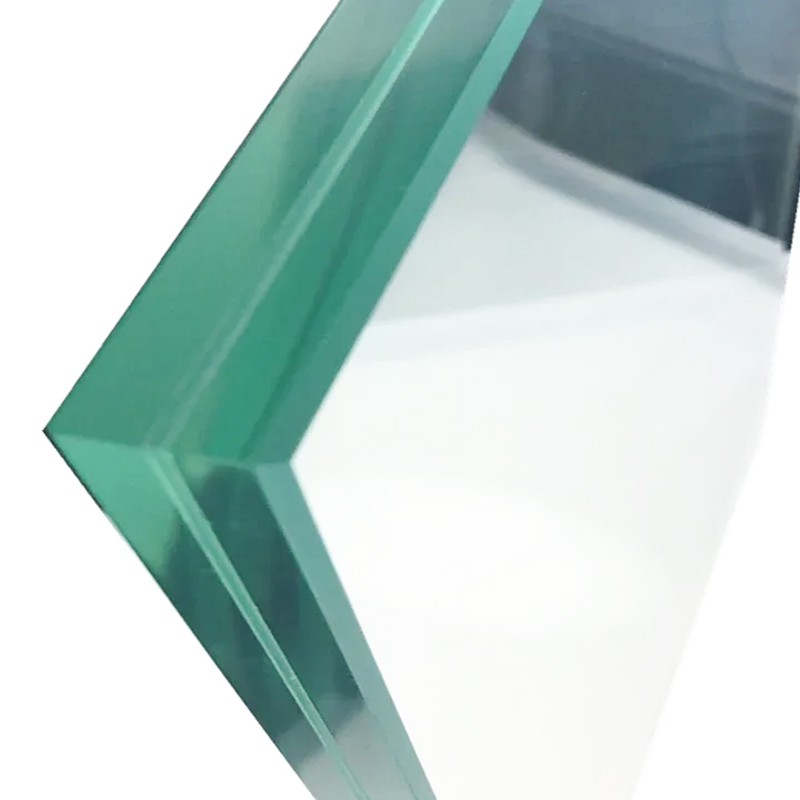
Laminated glass bonds two glass lites with a polyvinyl butyral (PVB) interlayer under heat and pressure. PVB is viscoelastic: when the pane flexes under a sound wave, the interlayer stretches and dissipates part of that motion as a small amount of heat. This damping suppresses resonant transmission and flattens the coincidence dip, which is exactly where monolithic glass fails.
Typical tested values show the gap clearly. A 6 mm monolithic pane sits near STC 31. A 6.38 mm laminate built with standard 0.76 mm PVB reaches roughly STC 35. A 6.76 mm laminate built with a dedicated acoustic PVB commonly tests at STC 38-39. The acoustic version uses a softer, more heavily plasticized formulation with a lower shear modulus, tuned to absorb energy across the speech and traffic bands instead of only at resonance.
Because the interlayer is the performance core of acoustic glazing, procurement teams should evaluate it as carefully as the glass itself. Whether PVB sound insulation interlayer film helps with traffic noise depends directly on this damping behavior, which we examine in a companion technical article.
 HT-S PVB Sound Insulation Interlayer FilmThis acoustic interlayer adds a damping core that suppresses sound wave propagation, reportedly improving sound insulation by about 5 dB in the 1,000-4,000 Hz range most sensitive to human ears, while maintaining laminated glass safety.View Product →
Comparing Window Constructions at a Glance
The table below summarizes how common constructions perform. Values are typical laboratory results for the glass panel itself; installed performance usually lands 1-3 points lower depending on frame and sealing quality.
| Glazing option | Typical STC | Where it helps most | Practical fit |
|---|---|---|---|
| 6 mm monolithic glass | Around 31 | Baseline only | Budget openings without noise targets |
| Retrofit film on monolithic glass | +1 to +3 | High-frequency hiss and voices | Rentals and heritage glazing |
| 6.38 mm laminated with standard PVB | Around 35 | Speech and mid frequencies | Standard safety and noise glazing |
| 6.76 mm laminated with acoustic PVB | 38-39 | Traffic, speech, coincidence region | Bedrooms, offices, roadside hotels |
| Acoustic laminate in a double-glazed unit | 40 and above | Broadband, including low frequencies | New builds and full facade upgrades |
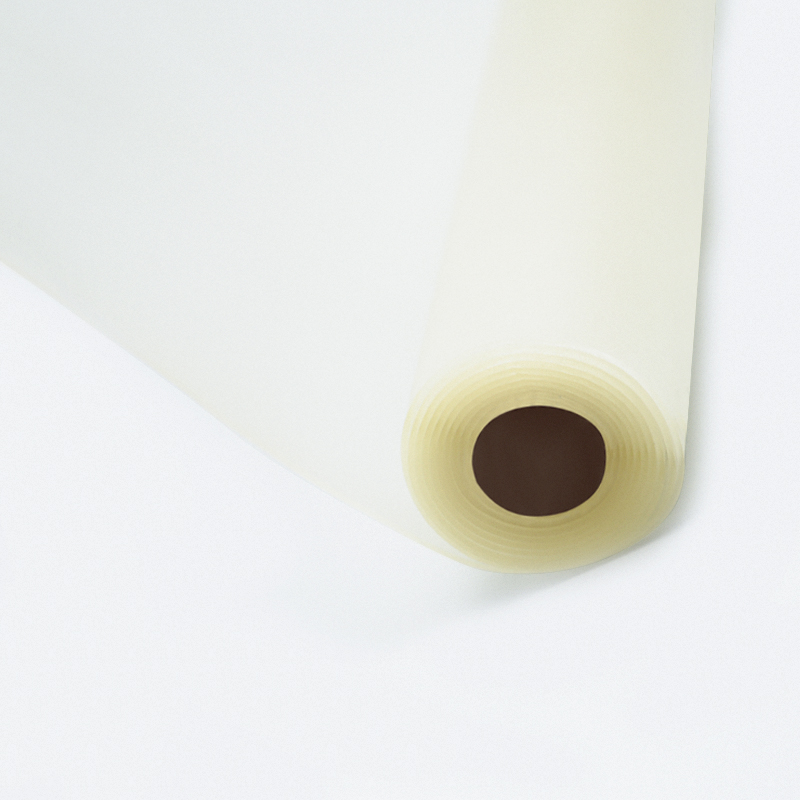 Architectural PVB Interlayer FilmA transparent, mechanically strong interlayer for laminated safety glass, offering sound insulation, UV resistance and penetration resistance, relevant here as the base construction choice behind the performance table that follows.View Product →
Choosing and Specifying an Acoustic Interlayer
Match the Interlayer to the Noise Spectrum
Start by identifying what actually bothers the occupants. Traffic and aircraft noise are dominated by low frequencies, so combine an acoustic PVB laminate with a double-glazed unit and a wider cavity; the pane spacing, not just the interlayer, decides how much low-frequency energy gets blocked. Speech and music sit in the mid and high bands, where acoustic PVB alone delivers most of its gain. Asymmetric lites, for example 6 mm outside and 4 mm inside, shift the resonant frequencies of the two panes apart and further smooth the transmission curve. Many architectural projects also require solar and thermal control in the same opening, so confirm early that the acoustic layer can coexist with a heat-insulation interlayer in one laminate without conflicts in lamination parameters.
 PVB Heat Insulation FilmA nano-modified PVB interlayer combining infrared blocking with sound insulation and safety, useful when an acoustic glazing project also requires solar and thermal control within the same laminate.View Product →
What to Verify with an Interlayer Supplier
Acoustic claims are easy to make and hard to compare, so ask for specifics before committing to a configuration:
- Tested STC and OITC data for your exact glass make-up, not generic catalog figures.
- Interlayer thickness options and tolerances, since damping rises with thickness and 0.76 mm is the common architectural baseline.
- Production width for large panels; wide automatic die heads such as 3.6 m allow oversized lites without splicing.
- Certified quality systems, for example ISO 9001:2015, plus documented adhesion and haze testing.
- OEM/ODM support if a project requires custom width, thickness, or tint.
The decision sequence stays the same across projects. Fix the cheap leaks first, choose the glass make-up for the noise spectrum you actually face, and treat film as a supplement rather than a solution.
- Seal and check frames, gaskets, and sash closures.
- Select laminated glass with acoustic PVB where traffic or speech privacy matters.
- Add a double-glazed cavity for low-frequency sources.
- Apply retrofit film only where glass replacement is impossible.
Specified this way, the window finally does the work the film was expected to do.