language
 English
 русский
 Español
 عربى
عربى
 中文简体
中文简体

Content
- 1 What Vidrio Laminado Means in Practice
- 2 The Interlayer Decides How the Panel Behaves After Breakage
- 3 Reading the Build-Up: Thickness, Tolerance and Edge Details
- 4 Where Each Build-Up Actually Gets Used
- 5 Sound, Heat and UV: Where Speciality Grades Pay Off
- 6 Structural and Impact-Rated Glazing: When SGP Earns Its Cost
- 7 Processing, Storage and Quality Checks
- 8 A Practical Procurement Checklist
A 1.2 m by 2.4 m balcony panel takes a direct hit from a furniture trolley. Monolithic glass cracks and drops shards to the pavement below. Laminated glass, called vidrio laminado in Spanish-speaking markets, also cracks, but the fragments stay glued to a plastic interlayer, so the opening stays closed until the panel is replaced. That single behaviour is why overhead glazing, shopfronts, balustrades and vehicle windscreens are laminated instead of tempered alone.
Here is the short version before the detail: glass thickness governs stiffness, flatness and wind load capacity, while the interlayer governs what happens after breakage, how much sound and UV the panel blocks, and how long the edge stays clear. Choose the wrong interlayer and a perfectly built pane still misses its performance claims.
What Vidrio Laminado Means in Practice
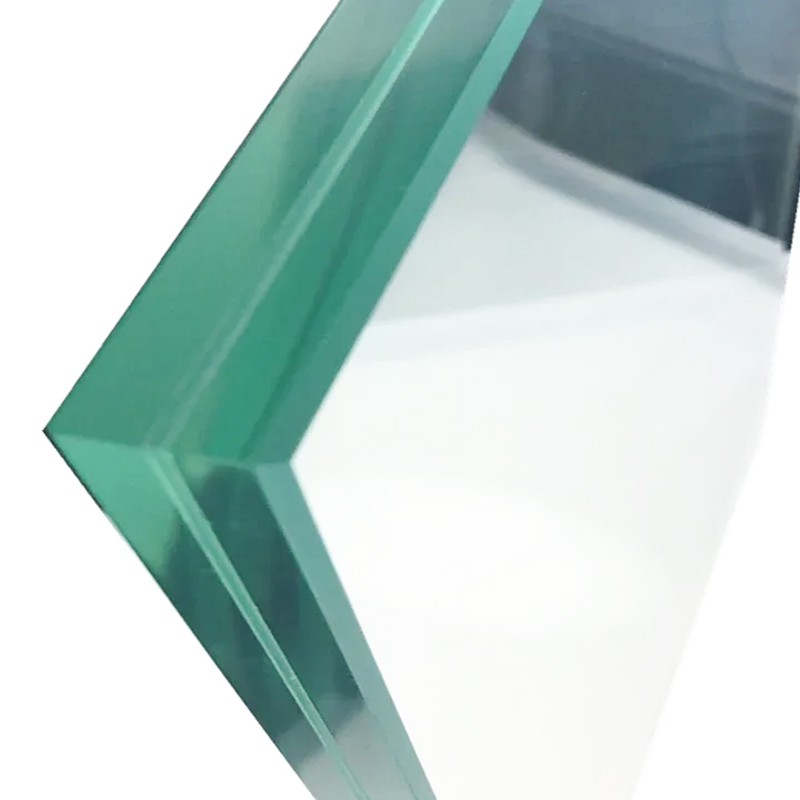
Laminated glass is an assembly of two or more glass panes bonded to one or more interlayers under heat and pressure. The bond is permanent: the interlayer softens in an autoclave, wets the glass surface and, once cooled, holds the plies together as one composite with defined post-breakage behaviour.
Three standards cover most orders: EN ISO 12543 for architectural laminated glass, ASTM C1172 for North American projects, and ANSI Z26.1 or ECE R43 for automotive glazing. They also define the build-up notation used on drawings, and that notation deserves a careful read, because 44.2 is not 44 mm thick.
- Digits before the point: glass thickness in millimetres.
- Digit after the point: interlayer gauge in units of 0.38 mm, so .1 is 0.38 mm, .2 is 0.76 mm and .4 is 1.52 mm.
- Example: 44.2 means 4 mm glass, 0.76 mm interlayer and 4 mm glass, giving 8.76 mm nominal total.
The Interlayer Decides How the Panel Behaves After Breakage
Two units built to the same nominal thickness can behave very differently, because post-breakage retention, acoustic damping and UV screening all come from the interlayer rather than the glass.
PVB (polyvinyl butyral)
PVB is the default for architectural and automotive glazing. Standard gauges are 0.38 mm, 0.76 mm and 1.52 mm, and two plies are often combined to reach a target or to sandwich a functional layer. It adheres reliably to float glass, screens roughly 99% of UV radiation below 380 nm, and is supplied in acoustic, heat-insulating and coloured grades. Moisture content matters: most processors keep film between 0.3% and 0.6%, because dry film loses adhesion while damp film blisters during the autoclave cycle.
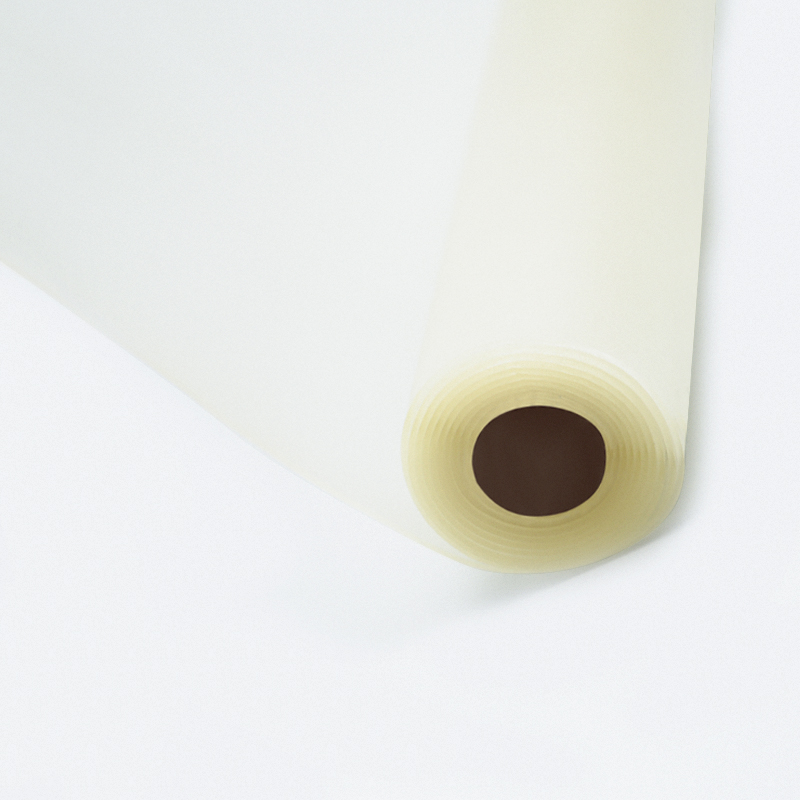 Architectural PVB Interlayer FilmPVB interlayer film produced by our company is a polymer material made from polyvinyl butyral and plasticizer through plasticization, formed by pressuring with other a...View Product →
EVA (ethylene vinyl acetate)
EVA cures at lower pressure and is often processed without an autoclave, which suits decorative lamination, printed interlayers and short runs. It tolerates moisture better than PVB, but adhesion control and long-term clarity depend on the supplier's formulation, so EVA is a deliberate choice rather than a default.
SGP (ionoplast)
Ionoplast interlayers are roughly two orders of magnitude stiffer than PVB in shear and keep much of that stiffness at 50 to 60 °C, so a broken panel still carries load. That is why they appear in structural glazing, canopies and blast-rated openings.
Reading the Build-Up: Thickness, Tolerance and Edge Details
Four numbers on the purchase order decide whether the delivered glass matches the drawing: nominal thickness, thickness tolerance, bow, and edge detail.
Nominal thickness is the sum of plies and interlayers. Tolerance is usually quoted on the total, and plus or minus 0.2 mm is a common starting point for small formats; larger panes need a wider window, because glass is not rolled to steel tolerances.
Edge detail quietly saves or loses laminated units. The interlayer is normally trimmed a few millimetres inside the glass edge so it cannot wick moisture or bridge to the frame, and exposed edges in structural work are sealed with a compatible sealant.
| Notation | Glass plies | Interlayer | Nominal thickness | Typical use |
|---|---|---|---|---|
| 33.1 | 3 + 3 mm | 0.38 mm PVB | 6.38 mm | Interior partitions, furniture, display cases |
| 44.2 | 4 + 4 mm | 0.76 mm PVB | 8.76 mm | Shopfronts, balustrade infill, general glazing |
| 55.2 | 5 + 5 mm | 0.76 mm PVB | 10.76 mm | Entrance doors, low-level glazing |
| 66.2 | 6 + 6 mm | 1.52 mm PVB | 13.52 mm | Overhead glazing, acoustic builds, balustrades |
| 88.4 | 8 + 8 mm | 1.52 mm PVB | 17.52 mm | High wind load, large spans |
| 66.4 (SGP) | 6 + 6 mm | 1.52 mm SGP | 13.52 mm | Structural glazing, hurricane zones, walk-on floors |
Where Each Build-Up Actually Gets Used
Applications map predictably onto that table. Balustrade infill and shopfronts sit at 44.2. Overhead glazing, and anything people walk beneath, moves to 66.2 with a 1.52 mm interlayer. Walk-on floors and glass fins rarely go below an ionoplast. Automotive windscreens follow a separate route: 2.1 mm or 2.6 mm glass with a 0.76 mm acoustic PVB, controlled by ECE R43.
How these assemblies are used across building, transport and interior work is collected on our application overview page.
Sound, Heat and UV: Where Speciality Grades Pay Off
Speciality grades earn their premium when the specification carries a number. A 6 to 12 to 6 insulating unit with standard PVB is usually rated around Rw 34 dB; moving one ply to a 0.76 mm acoustic PVB grade typically adds 2 to 4 dB without changing frames or glass thickness. Heat-insulating PVB contains IR-absorbing particles, and combined with a low-emissivity coating, solar heat gain coefficients near 0.30 are realistic. Standard PVB screens about 99% of UV below 380 nm, which protects finishes and artwork, but it does not stop visible-light fading, so any fading claim should be tested against the real exposure.
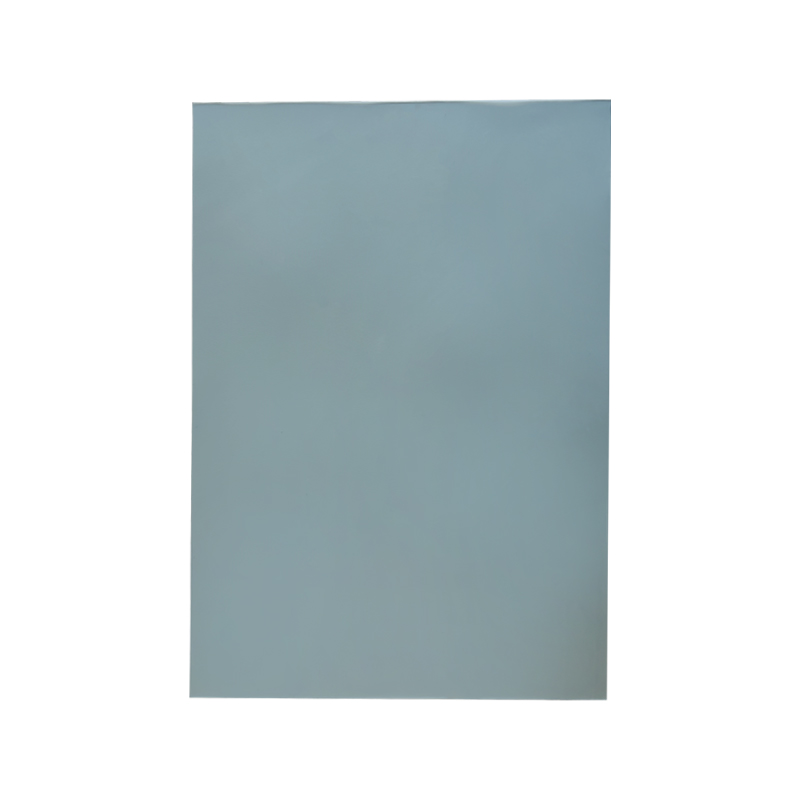 PVB Heat Insulation FilmPVB heat-insulating film is a blend of polyvinyl butyral resin with plasticizer and other plasticizers, adding nano heat-insulating medium using extrusion and calender...View Product →
Structural and Impact-Rated Glazing: When SGP Earns Its Cost
Where glazing must keep working after an impact, SGP changes the economics. A 6 mm plus 6 mm unit with a 1.52 mm ionoplast interlayer retains a large share of its stiffness after breakage and is less temperature-sensitive, so some overhead and structural designs can use fewer supports. That matters for hurricane and blast openings, where the requirement is not simply that glass does not break but that it stays in the frame during a defined pressure or missile test.
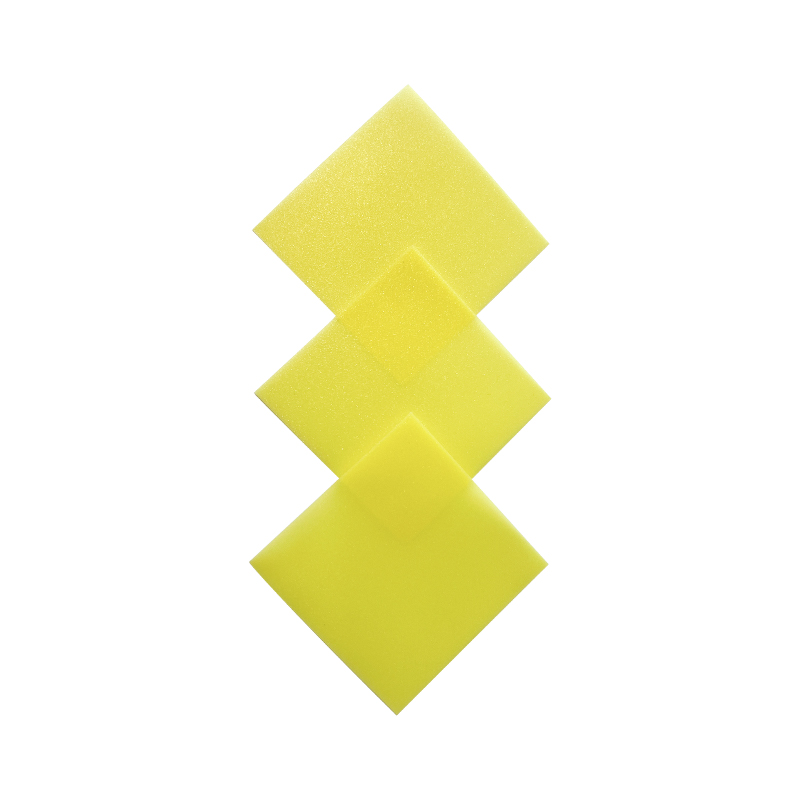 SGP FilmIonic interlayers are copolymers of ethylene and sodium methacrylate, representing new innovation in ultra-safe glass interlayers. The shear modulus of the Ionic inter...View Product →
Processing, Storage and Quality Checks
Lamination quality is settled in the plant, not on site. De-airing removes air from the bond line, and the autoclave cycle, typically above 10 bar and 130 °C for architectural PVB, converts the stack into a composite. Under-cured units look perfect on delivery and fail at the edge a year later.
Storage is part of the process. PVB film is hygroscopic, so rolls stay sealed until use and are stored at roughly 5 to 25 °C with low relative humidity, and offcuts should not sit in open plant air. Film width matters on oversized panels: a supplier running a 3.6 m casting die can deliver the full width needed without splicing, which removes a weak line across the pane.
Useful checks on trial panels include haze under projection, bubble and dust counts, edge adhesion, and for critical orders a boil or UV-aging test. The full sequence is described in our guide on how PVB interlayer film is laminated to glass.
A Practical Procurement Checklist
- Write the build-up notation and nominal thickness on the order, with a tolerance figure. Never order "6 mm laminated".
- Name the interlayer family and gauge in writing; laminated alone says nothing about acoustic, thermal or impact performance.
- Quote the standard and impact class you need, for example EN 12600 2B2 for safety glazing or ASTM E1996 in windborne debris regions.
- Confirm edge treatment: interlayer recess, edge seal, and whether edges are polished or covered by a frame.
- Request batch traceability and certification; ISO 9001:2015 and ISO 14001 are a reasonable minimum filter for a film supplier.
- Check shelf life and delivery conditions, especially in hot climates where film ages on a loading dock before lamination.
Most laminated glass complaints trace back to three variables: the wrong interlayer gauge, film that was stored or handled badly, and an autoclave cycle nobody verified. Settle those on the purchase order and in the plant, and a 44.2 panel will still be doing its job long after the frame has been repainted.